
Where I choose to belong: “Ya estamo en la calle sal de tu balcón”
I honestly was not a Bad Bunny (Benito) fan until a few weeks ago. Over the last weeks, I’ve been following his public appearances, and now also everything around the Super Bowl. Alongside that, I read several analyses about him, including one in La Nona Ora by Remi Carlioz with this striking idea of belonging but not being part of.
And then there were his final words in the Super Bowl—God bless America—followed by naming all the countries in the American continent.
That opened something for me.
If someone asked me to describe my own process of self-development over the last years, this might be the clearest way to put it: I found myself, too often, belonging to things without truly being part of them. Constrained by the rules of groups I did not feel I belonged to. Framed as the other—a foreigner, an alien, or, as the Dutch word puts it, a vreemdeling: literally a “stranger,” someone tolerated and proximate, but never fully inside.
You are expected to belong. And yet everything you bring—everything you build, develop, or contribute—is treated as property of the system, not as something you co-own.
I imagine this is close to how Puerto Ricans experience it. And how the law reflects it.
Five years ago, I began choosing—very explicitly—to belong only to the things I am genuinely part of. To create new tables where we all can belong. I’ve been fortunate to find opportunities to do that. And today, if there is one clear criterion for whether I work with a client or join an initiative, it is this: do I feel that I truly belong—and does this work reinforce structures where others can belong as more than tolerated participants?
If not, honestly, no matter how attractive the opportunity is, I’m not interested.
Because politics is not played only where we are told it is. I believe we all play politics and weave the narratives for or against social justice and true inclusion, every single day. We all make choices—daily—about what kind of world we are reinforcing or resisting.
I’m aware that I have a voice, and enough of a network, to stand up for others who have less of both. For those who, as the article puts it, are dismissed as noise.
What struck is how precisely this move can be named: when a system decides your speech is “noise,” it is not disagreeing with you—it is denying that you are speaking at all.
What happened at the Super Bowl didn’t change the laws, yet. Still, it carried enormous symbolic weight. It encouraged people—regardless of culture or minority status—to play politics where they are. To work so that people can belong. And to resist the narratives that trap people in predefined roles and then dismiss their voices as irrelevant or excessive.
Coincidentally, this weekend at home, I had a long conversation with my husband and my son. I felt that my daughter—who is a teenager—and I— who, since my forties, have allowed myself to be angry when it feels justified—were being framed as unreasonable. Not explicitly, but through a familiar language used for women in families and workplaces alike: emotional, reactive, hysterical.
And once again, a simple adjective becomes a web. A single word that carries an entire narrative—one that disqualifies what you say before it is even heard. This is the same mechanism used against women, against foreigners, against anyone marked as “other.”
That is why this moment matters.
And that is also why I loved the way he said God bless America. Because for those who learned geography in the Northern Hemisphere, it is worth being precise: America is one continent, composed of South America, Central America and the Caribbean and North America, 35 independent countries. People from all these places are Americans. The United States is parth of North America—but it does not own the word American.
Reclaiming that matters.
What I am also realizing—more quietly, but just as decisively—is how this lived experience has shaped my own work and the choices I make to advance my mission. The desire to avoid creating structures that own people, extract from them, or ask them to belong without truly being heard has deliberately restrained me from growing my own practice. I see that now with clarity. This feels essential to me. Not as a management preference, but as a political and ethical one.
So here is the call I take from this moment. For those of us who are part of minorities, the invitation is to play this—to play politics and claim our voices where we are; to insist on belonging where we are truly part, even if it has a temporal cost that seems insurmountable. I assure you that in the long term, the feeling of self-fulfillment and of exerting agency over one’s own future is priceless. The call is to actively, through our choices, refuse the narratives that reduce our voices to noise and, with courage, compassion, love, and hope, build new ones that make the old ones obsolete. Because, as Buckminster Fuller’s famous quote on systems change says:
“You never change things by fighting the existing reality. To change something, build a new model that makes the existing model obsolete.” Buckminster Fuller
And for those who hold the privilege of setting narratives—whether in institutions, families, media, or everyday language—the responsibility is different but just as political: to be deeply mindful of the webs you cast. Of how words, labels, and structures can paralyze people, discount their voices, and quietly decide who is heard and who is dismissed.
Because if we are serious about justice, that self-awareness and continuous commitment to courage over comfort is not optional. It is our civic duty—the way we can build a livable planet and a society that honors the human dignity of everyone, for us and for the generations to come.
Between North and South: Reflections on Belonging, Water, and Discernment
I just arrived in Sitges, a coastal town near Barcelona, where I will most probably be spending more time over the coming years. A bit of the Spanish-speaking home I can’t have in my own country.
This week, I’ve been thinking about what I want to focus on this year— and about my own mission in the chaotic world and time that 2026 promises to be. For some reason, recent experiences and what I read in the news keep bringing me back to the North–South relationship, especially between the Americas and Europe. Not as an abstract debate, but as something deeply personal—and increasingly central to my work.
Even more so today, with the realization that a historica012l milestone has been reached. On January 17, in Paraguay, after nearly 26 years of negotiation, the European Union and Latin America’s Mercosur bloc signed a landmark free trade agreement—against a backdrop of global instability. This unfolds in a context marked by disruptive U.S. foreign policy moves in the region, including the sudden removal of a South American authoritarian leader from Venezuela—news that hit close to home, because I am from Nicaragua. I must confess that I am still forming my own opinion, while recognizing that it is the voices of Venezuelans living this reality firsthand that matter most.
I grew up in Nicaragua reading Cuban poets and studying from Russian- inspired books at school—my sister reading Sputnik, the Russian magazine for teenagers—while at the same time longing for freedom and democracy. Something I was lucky enough to experience briefly in the 1990s, starting when I was 12 and lasting into the early 2000s, a few years after I left to study in Delft.
Unfortunately, this young democracy was short-lived. What my mentors —and my boss at the time, then Minister of Education and head of the social cabinet—had warned me about before I left to study in the Netherlands did end up happening. Ortega returned to power in 2005, and the rest is history.
The silver lining was the upbringing this period gave me: a resilient mindset, a strong will, and an almost limitless sense of hope. I’m reminded of how unique that upbringing was when I find myself laughing nonstop watching Marcello Hernandez ’s recent Netflix show American Boy—a small glimpse into a childhood that, in different ways, shaped both of us.
As I said, all these recent experiences and world news keep bringing me back to the North–South relationship between the Americas and Europe. And I’ve been thinking more deeply in my way here. There is something about taking off and seeing the world from the clouds that helps me with taking distance, zooming out, and reflecting more deeply.
And what am I finding out? That I know I want to write. I’m just not fully sure yet about the focus I want to choose. While scientific and policy work feels urgent and necessary—and I have done it for decades—I also find myself drawn to deeper reflections on life, meaning, and purpose- driven leadership.
I also feel increasingly conflicted about how to think about colonization. I reject the hierarchies, dependencies, and supremacies it created— dynamics that still place me, as a Latin American, either at the service of historically dominant Western structures, or misunderstood within the Global South contexts I work in. And yet, looking here at the name Santa María—one of the ships that crossed the Atlantic—I also know that I, Mónica Alejandra de Jesús Altamirano, would not exist without this history.
I am a product of what we call in Latin America mestizaje—formed across different cultural contexts, including being raised by a Dutch stepfather. And my children even more so.
So maybe my task—personal and professional—is to learn how to navigate that discomfort. To bridge worlds. To help chart what a new, regenerative relationship between North and South could look like—one that allows all of us, without exception, to thrive, together with nature.
This is why the EU–Americas moment matters to me. I’m grateful for the analysis being done by colleagues— Gonzalo Meschengieser (you can see his article here) and the increasingly inquisitive discussions we can have as LAC community working on water and climate. What emerges clearly is that water and freshwater ecosystems must be central—not peripheral—to this new phase of cooperation if our economies are to become truly regenerative and resilient to a changing climate.
The investments ahead—on adaptation, resilience, and new value- creation models—are steep. They will require different ways of thinking about trade, finance, and shared responsibility.
Having worked on the shaping of a water foresight event about the financing of the EU water resilience with the EIB, and now contributing to a white paper while planning upcoming exchanges with fellow Latin Americans, I feel both hopeful and humbled. There is still so much to research and understand—particularly about the role of trade in water resilience.
The older I get—now having lived half my life in the Netherlands—the more I learn to surrender. The more I see that there is no black and white, only many shades of grey and grace. As the Jesuits taught me. As we say in Spanish: God writes straight with crooked lines.
And yes, I even find myself wondering: what if today’s disruptions and authorative leaders are also forcing us to rethink old supremacies, to imagine a more genuine multilateralism, and to ask harder questions about leadership, equity, and what really moves us forward?
I’m trying to embrace the discomfort of not knowing. Maybe this will be a year of building—of expanding impact through my work. Or maybe another year of discerning. Or perhaps both.
Because clarity—real clarity—is often the first step toward doing something worthwhile. As Jean-Philippe Courtois wrote in his January 15 blog, “Preparing Your Mind to Shape the Future”: “Every season of my life that truly mattered started the same way: not with a strategy, but with clarity”. You can read his blog here.
The silver lining of times like these—full of stress, shocks, and uncertainty—is that we are pushed to dig deeper, to discern what truly matters, and to become more present to those around us as we work together toward an envisioned future.
The future is in our mouth: bells of hope in a loud world
Last week was pretty intense. I had little time to recover, and by the weekend, I felt deeply depleted. The news of far-right protests in The Hague, destroying the city frastructure and calling for no more migrants, only added to the weight.
But then I stumbled on a new series of The On Being Project podcasts from Krista Tippett about the portal of hope. And I want to share it with you—because I think we need it so much right now. The world around us feels in turmoil, and yes, things can go very wrong. Yet these first three episodes gave me three insights that stayed with me.
First, if we want to change the reality of our world, we must begin by imagining it—and live as if it already exists.
Second, writing matters. It allows us to take ownership of our experiences, to shape them, and to gain just enough distance to reflect more deeply.
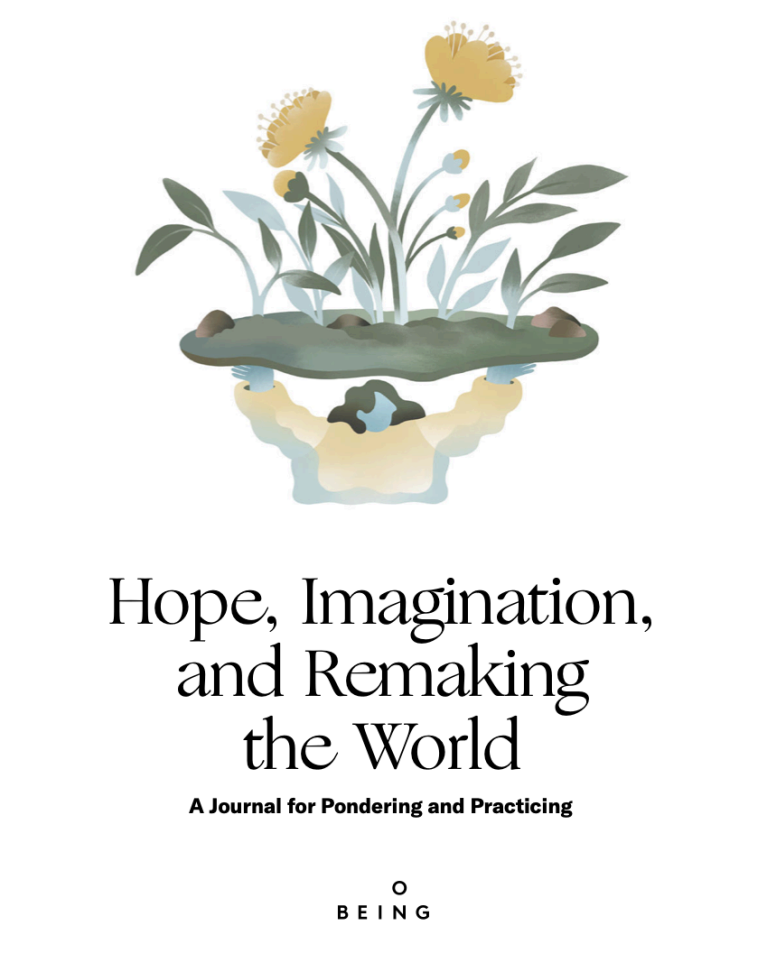
And third, as the poet Ocean Vuong says in the interview, the future may not be in our hands, but it is in our mouth. She reminds us that in societies filled with loud, divisive voices, the real question is: how many of us are willing to step out of our comfort zones and become voices that unite? Loud bells, bridges, a force for good that gathers cattered dreams, heal old wounds and channels this raw energy it toward another future? If we alter our language, Vuong asks, where might our future be?
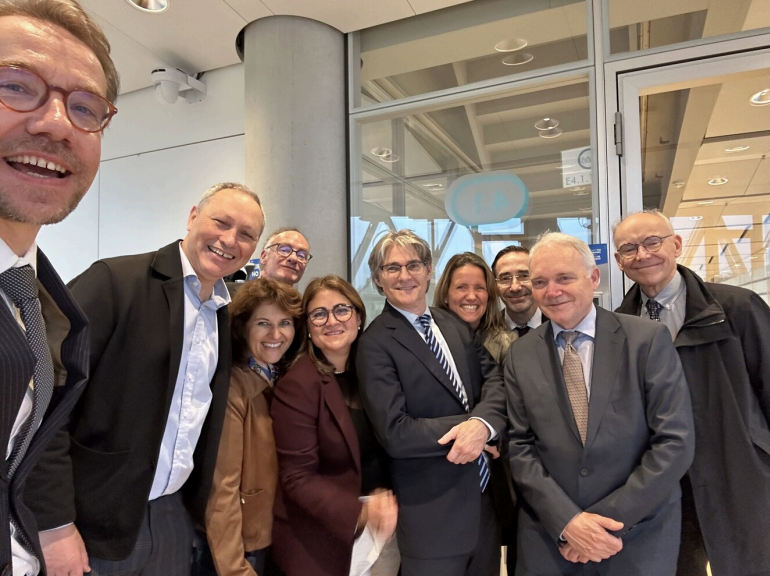
A week later, returning from Luxembourg after an exhilarating meeting with people equally committed to a regenerative and equitable future— committed in spirit, even when our opinions might diverge—I felt this truth even more strongly. The future lies in our capacity to weave together new narratives. Narratives that unite. Narratives born of collective intelligence, helping us stretch the muscle of hope together.
We reach these new narratives, these visions and “missions” for our economies and social contracts, only through brave conversations—where disagreement is not feared but welcomed. Where we dare to hold opposing truths with kindness, and search for the fragile balance between them. Nature whispers this lesson: life endures in the ension of seeming opposites—cooperation and competition, individuality and interdependence, divergence and connection.
Abundance begins where fear ends.
This is the work I long to keep doing with others: creating spaces where we craft stories that balance what seems opposed, and remind us of our shared longing for a livable and equitable world, for us and for all the generations to come.
To get there, we must pass through fear and while not shying away from pain, look at injustice and despair right in the eyes, open ourselves to a new reality, rethink our assumptions, reimagine the world as we dreamed it as children, with fresh yes . We must let go of scarcity thinking. Only then can we step into a future abundant with possibility.
Hope is not found in certainty, but in the courage to weave new stories together.
👉 What gives you hope or despair right now? And what does hope look like through the story of your life? – you can download the journal that accompanies the podcast serie here: https://onbeing.org/wp-content/uploads/2024/06/Journal-full.pdf
Half a life sailing away from home: Love, struggles, hope and the journey toward belonging
This month marks 23 years since I came to live in the Netherlands—half of my life. It has been a special week, not least because going out three times to Sail Amsterdam brought together so many threads of my world.
I arrived here 23 years ago to become a student again, after serving as a technical assistant to the Minister of Education in Nicaragua. My journey began in Delft, where I joined a program at the Delft University of Technology designed for engineers who wanted to think beyond technical systems and engage with the bigger questions of infrastructure and public policy—hoping to return home and contribute to deepening our nascent democracy.
But life took turns I did not anticipate. I fell in love, and my path shifted. I stayed on to pursue a PhD on public–private partnerships in the road sector. That original dream of returning or of joining a development bank never materialised. Living in the Netherlands—building a family, taking root here—reshaped my priorities. And though I hold a PhD from one of the country’s top universities, and believed I knew the culture since I was raised by a Dutchman, the reality of being ‘different’—whether as a woman, a foreigner, or from another discipline—has not always been easy.
Still, as the years passed, I learned to follow my heart. My mission evolved into something both simpler and larger: to seek ways of making development more equal, of creating a world where all can thrive. This calling carried me across different fields—environment, infrastructure, water, adaptation—each one shaping me in new ways.
This week brought that home to me in a special way. At SAIL Sociëteit Amsterdam , I felt my professional and personal worlds come together. My husband, who works in the shipbuilding industry, introduced me to that world. And on Friday, through the invitation of the Peruvian Embassy, I joined the commemoration of 200 years of bilateral relations between Peru and the Netherlands. Peru—a country that for many years also felt like home to me—where I first deepened my work on valuing water.
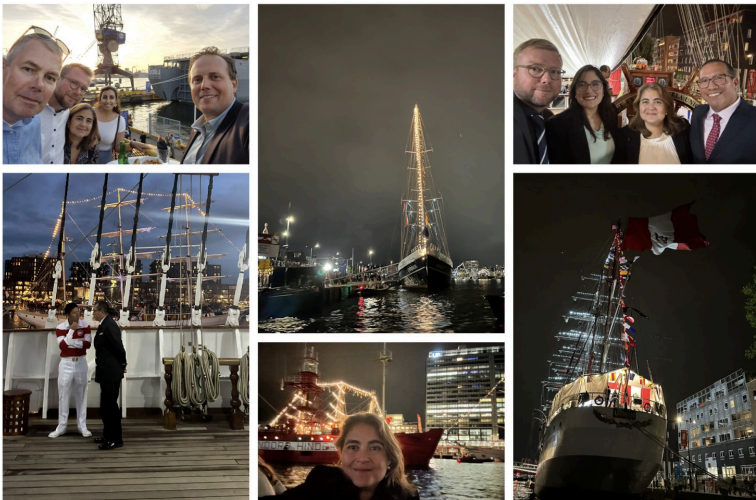
In moments like these, I realise how lucky I am, and a deep sense of gratitude overwhelms me. Despite the limitations and extra challenges I have faced in this country for being different, I can now say, at 46, that I am Nicaraguan at heart, but also Dutch.
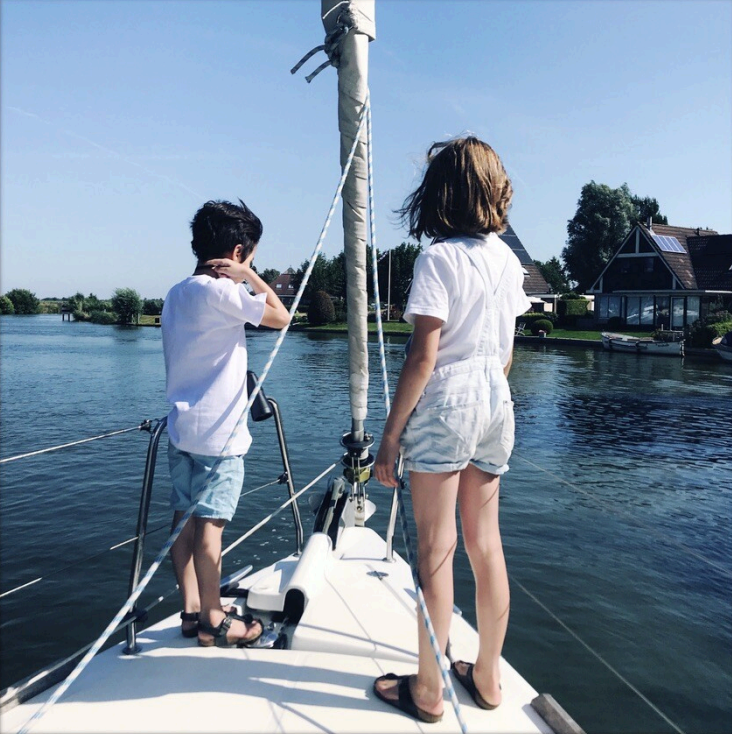
One of the things I love most about the Netherlands is sailing. My husband comes from the north, and one of our very first outings together was a sailing weekend with the European Students’ Association. Sailing carries its own wisdom: you set a mission, a direction, a North Star. You know there will be strong winds against you, but you cannot let
them paralyze you. You simply adjust your sails and trust the wind. You follow your intuition, and try to believe has hard as possible, that you one day -sooner or later- will arrive to where you were meant to be.
That is, in many ways, how I see my own path—what I would call being a policy entrepreneur. Having the freedom to follow the directions where I can create the most impact. It has never been about money, nor about titles or positions. At the end of the day, what matters most is the life that flows through connections—the friendships, partnerships, and moments of solidarity that give meaning to the journey. And within these connections, in their diversity, lie the transformative insights that change not only our own lives but also the world at large.
And this is what I love about the regeneration approach: it reminds us that we cannot address the climate crisis without mending what has been broken. It is about weaving back the strands that have separated humans from one another and humans from nature.
The root cause of global warming is a massive disconnection: between each other, between people and nature, and even within nature itself—fragmentation, pollution, and degradation caused by humans. Regenerating and reversing the climate crisis is really about reconnecting those broken strands. That is what real solutions are, as opposed to stand-alone techniques and technologies trying to “fix” the problem. Paul Hawken
While I have not been able to do as much as I once dreamed for my own country, Nicaragua, I look back and I am grateful that my homeland has become Latin America and the Global South at large. And the fire within me has only grown—to find new ways and investment planning approaches that bridge global agendas with local needs, to prevent countries from slipping back, and to help them advance toward truly regenerative models of economic development.
As I look back on these 23 years, I see not only the struggles but also the grace that accompanied them. In my most difficult seasons, there were always people—angels, truly—who stood beside me, helping me see light again. Each time I surrendered, asking for God’s love and joy to surround me, those angels appeared. For them, I am profoundly grateful. Out of those times came lasting friendships, partnerships, allyships. Gracias queridos amigos y socios!
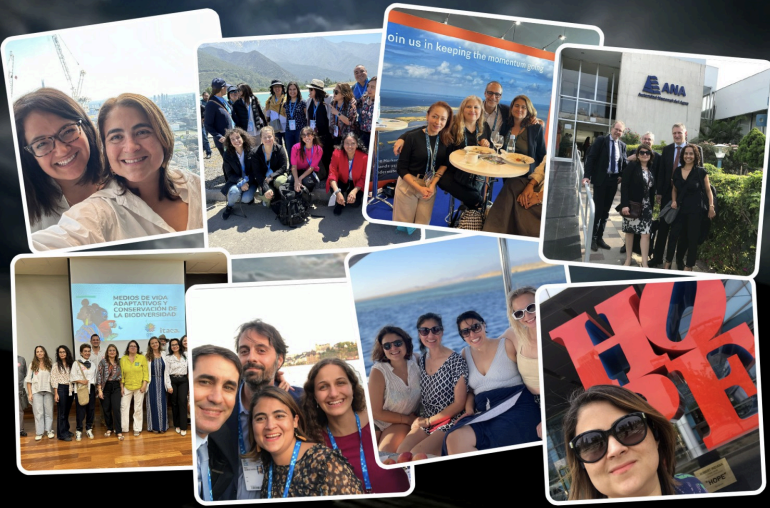
And now I look forward to Stockholm Water Week next week, to the LAC Regional Water Dialogues in October, to continuing the work at United Nations Economic Commission for Latin America and the Caribbean (ECLAC) and with partners within the NetworkNature EU Consortium, enhancing local capacity to structure truly transformational and financially viable investment program. In my role as board member at CAEI, an agroindustrial group in the Dominican Republic committed to becoming a steward of water and of equitable development, including for migrant workers. To work with the We Are Water Foundation , with the European Investment Bank (EIB) Institute , and with many others, creating spaces to rethink and reimagine a regenerative future.
If there is one thing I carry from growing up in a country shaped by war, it is this: hope is powerful. And we need it—desperately—to make a better world.
Holding Fields of Tension Open: A Call for Pragmatic Action and Collective Healing for a Water Secure Future
Returning from four days of silence at the Oude Abdij Drongen vzw, I find myself with deeper clarity. Over these days, I finally understood my fascination for the Jesuits. It struck me in the calling Pope Francis made to the Jesuits last year when visiting the province of the Benelux. A moment I wish I could have witnessed.
“The Jesuits do not shy away from complexity. They step into the middle of areas of tension, navigating a path that moves constantly between two forms of courage: the courage to reach the extremes of society, to engage with the outcast; and the courage to pray, to wrestle with God, seeking hope for difficult and painful situations. It is this hope they bring back into the very tensions they face.”Pope Francis”
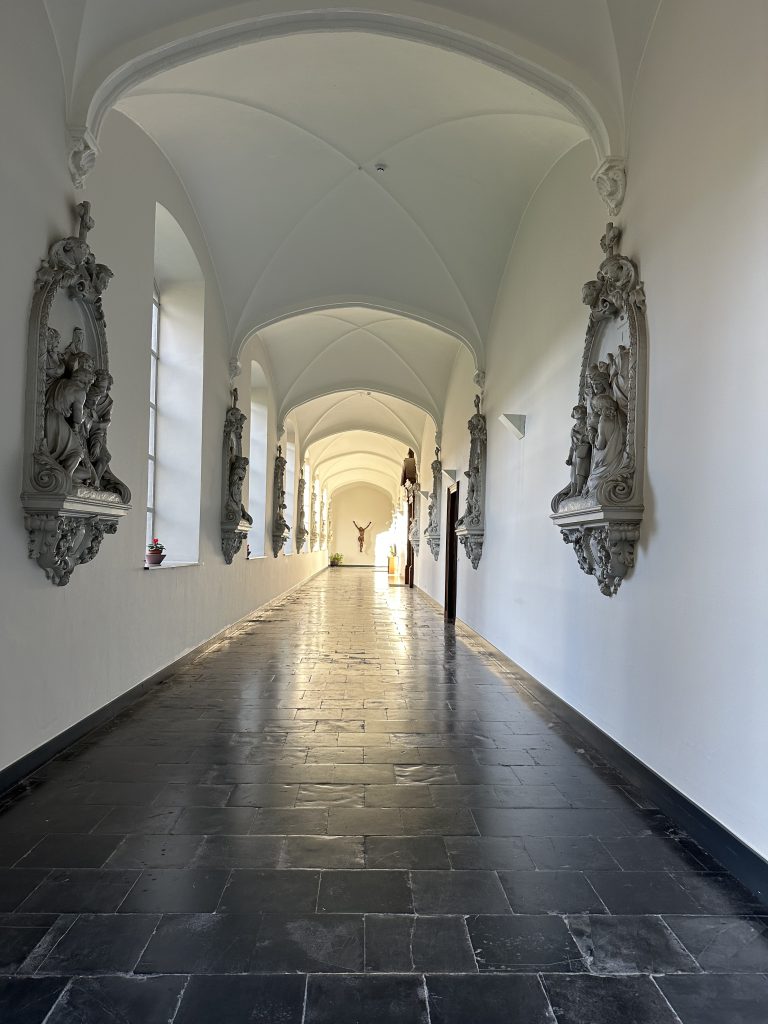
In the path I have taken over the last five years, I feel continually pulled in this same way. I take one brave step forward, only to find myself shaking with fear days later. I am combining things that have rarely been combined before, and this takes a toll. How is it that I care so deeply about water, people, and universal access, while simultaneously advocating for private sector participation—a controversial issue in so many contexts?
This constant act of combining opposites, while maintaining my obsession with coherence and loyalty, consumes tremendous energy. Yet in discovering that many Jesuits have made reconciliation—the holding of two apparent extremes—their mission, I feel a sense of relief. They hold open fields of tension, refusing to choose either side. Examples like a Jesuit priest who is both a priest and deeply immersed in Zen spirituality. They build bridges. Holding open a field of tension, they stretch and create a patch of fertile land for new seeds, ideas, innovation, and hope to take root in the world.
In learning that many others have followed and succeeded in this calling for building a bridge between apparent opposites, I found a new sense of peace. This work, though painful, misunderstood, and judged, is not without precedent. I now see that others have walked this path before me, enduring the challenges while creating the conditions for new possibilities.
For me, this is my calling: to reconcile the trade-offs I was trained to define as a policy analyst. To hold the tensions and endure the discomfort, because in doing so, I am preparing the soil for new seeds, new trees, and new life to flourish. And so, while the pain of holding this field of tension remains, I look forward to the innovation and hope that will grow from it.
What does this mean concretely?
I see the call of holding open this field of tension as one of transformation—one where healing from past injustices is not about rejecting private sector participation outright but about redesigning the structures that enable and regulate it. This means asking hard questions: Under what conditions can private sector involvement be structured to genuinely align with the public interest? What institutional safeguards are necessary to prevent extractive or exploitative dynamics? How can blended finance be leveraged in ways that prioritize equity and sustainability over pure profitability?
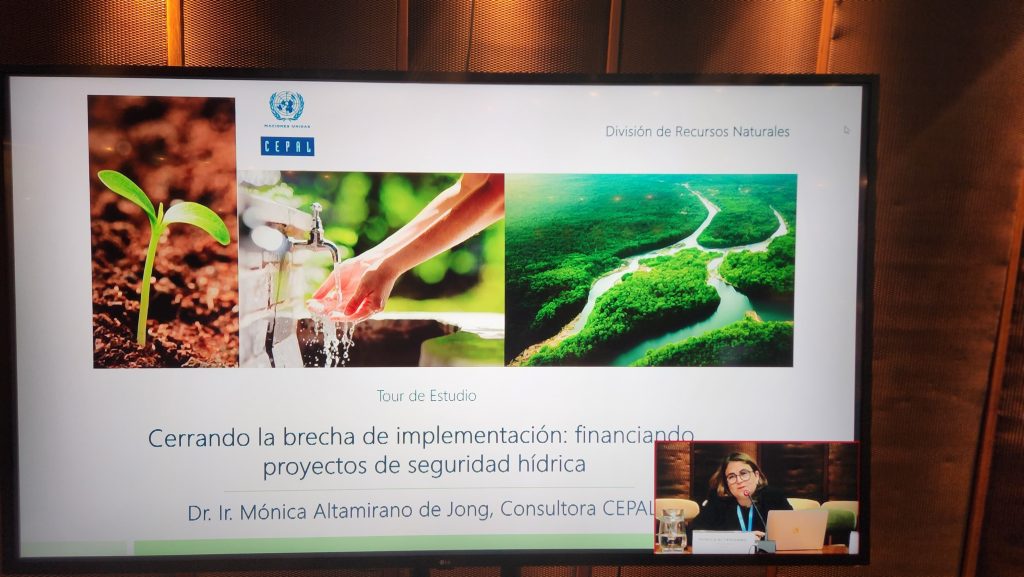
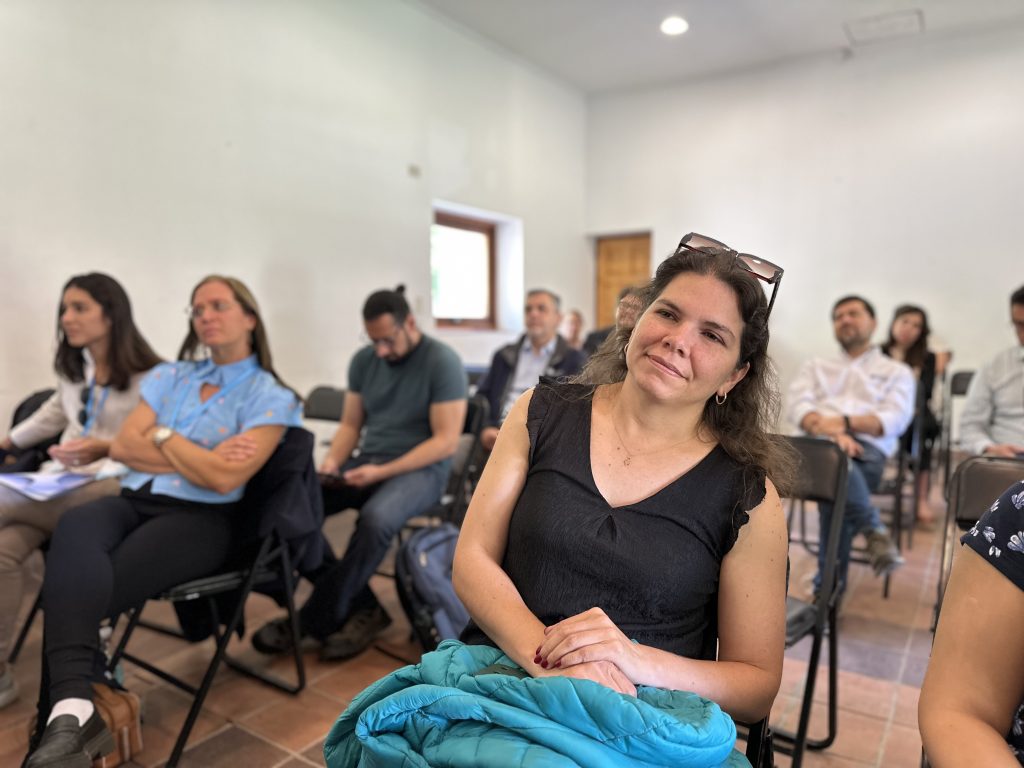
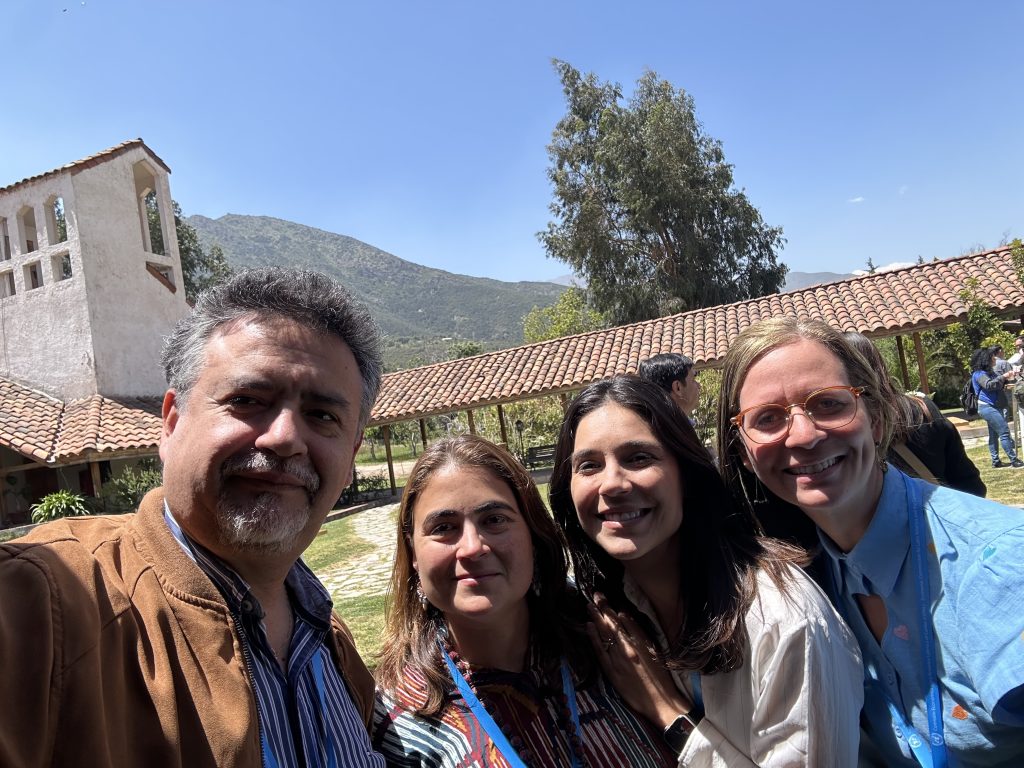
In my own way, I am also engaged in holding open fields of tension—between finance and justice, innovation and equity, pragmatism and idealism. Building bridges in these spaces is difficult because they require the patience to sit with discomfort, the intellectual honesty to acknowledge past failures, and the resilience to advocate for more nuanced, third-way solutions.Below is the speech I had the honor of delivering on November 15th at the Study Tour on Resilient Water Infrastructure, organized by ECLAC ’s Natural Resources team, with participants from 12 countries. Gracias Dr Silvia L. SARAVIA MATUS (PhD MSc BSc Economics) por este oportunidad de compartir mi visión y la historia personal que me motiva a empujarla.
Closing the Implementation Gap: Lessons from Experience and the Path Forward
I began my career calculating the costs of achieving the Millennium Development Goals in education, analyzing statistical data on school expenditures across the country. The findings were shocking, and I felt compelled to visit schools along the Atlantic coast, where operational and maintenance costs were inexplicably low. What I saw was disheartening—costs were low not because of efficiency but because there was no maintenance at all. Schools were being built near roads for visibility, to generate votes, while children continued to take lessons under mango trees. That realization changed my career path for good.
A year later, I became a technical assistant to the Minister of Education under a government that prioritized technically sound appointments over political ones. I observed firsthand how my boss and mentor, who led the social cabinet, negotiated with the World Bank and other donors to shift from a project-based approach to a programmatic one. The focus moved toward place-based strategies for the country’s ten priority education policies. Through this experience, I learned three crucial lessons:
- The White Elephant Problem: Infrastructure is not the goal—service provision is. We must focus on ensuring delivery rather than merely building structures.
- Institutional Context Matters: Copy-pasting solutions from other countries without adapting them to the local governance structure leads to inefficiencies and failure.
- Resource Constraints and Trade-offs: Financial and operational constraints are inevitable. Creativity and ingenuity are essential to design mechanisms that balance competing needs and make implementation feasible.
Recognizing these challenges, I chose to pursue further education at TU Delft in a program designed for engineers working at the intersection of policy and infrastructure systems. My Master’s in Systems Engineering and Policy Analysis led to a PhD on innovative contracts in the road sector, analyzing performance-based and public-private partnership (PPP) models across Finland, Spain, and the Netherlands—exploring strategies to mitigate possible opportunistic behavior from private sector in contract execution.
Now, 22 years later, with 16 years dedicated to water security and adaptation, I find myself working in one of the few countries where water is treated as a national security issue. Here, despite the sector being fully publicly financed, tariffs are structured to ensure cost recovery and service continuity. Water security, sanitation, and flood control are essential not just for daily life but for economic resilience, as scarcity -no only flood risk- has become a pressing issue too the last five years.
Persistent Pitfalls in Infrastructure Financing
Working as a specialist in PPPs and water security financing, I have observed public investment systems, procurement practices, and financial arrangements across Asia, Europe, and Latin America and the Caribbean (LAC). It is disheartening to see the same mistakes being repeated across social and environmental sectors. Political interests drive the creation of costly, unsustainable infrastructure projects—white elephants built to earn votes, rather than to provide lasting services. These ad-hoc, politically motivated decisions sabotage long-term sustainability, failing not only present communities but future generations as well.
I believe that as Latin Americans, we have already in place great technical and intellectual capacity. We can and must do better. There are already examples of progress—such as Peru’s Natural Infrastructure for Water Security Program, where politicians have inaugurated watershed conservation projects. These examples prove that political will can be aligned with sustainable and pragmatic investment in water security.
Shifting the Investment Paradigm: Breaking Institutional Silos
For the past three years, I have transitioned through multiple roles to influence the actors shaping upstream investment planning processes— those managing financial resources, developing investment frameworks, and designing procurement systems. These stakeholders hold the “carrots” that can incentivize change, bringing together traditionally siloed communities to collaborate, innovate, and implement more effective financing models.
Today, I share my personal perspective on the remaining challenges—the persistent disconnections between public and private stakeholders—and the emerging opportunities we must seize by overcoming mutual distrust and harnessing collective intelligence.
Where do we stand today?
A recent The World Bank Group study highlights that investment gaps in LAC’s water sector remain substantial. However, it is not just a question of increasing funding—28% of allocated funds are not implemented due to inefficiencies in project preparation and execution.
The consequence? The most vulnerable populations pay the highest price. Those without formal water connections pay disproportionately high costs for alternative sources. Every year of delay in water project delivery translates into mounting environmental and social costs, further widening equity gaps. These costs include preventable deaths, as seen in Santiago 25 years ago—a reality that continues to persist across many capital cities in the region.
Reframing the debate
While debates over private sector participation in water services remain highly polarized, the fact is that full-scale privatization is no longer on the table for most countries. Yet, a de facto privatization is already underway. Major real estate firms and multinational corporations, recognizing water as the “new gold,” are strategically acquiring land to secure control over water resources. Meanwhile, in many cities, people pay for bottled water, water truck deliveries, and even private wells in their homes—directly compensating private actors for services that should be provided publicly.
A common assumption is that lower-income populations cannot or do not want to pay for water services. However, decades of experience from organizations such as Water.org show that this is a myth. Given the opportunity, low-income households actively seek financing solutions to access water and sanitation services—because doing so restores dignity, improves household economies, and enhances overall well-being.
Identifying leverage points and driving systems change
To tackle these challenges, we must address two core gaps:
- The Gap Between Political Decision-Makers and Technical Experts: Politicians, eager to deliver visible infrastructure projects within their electoral cycles, push poorly prepared projects onto development banks and donors. Technical experts, while proficient in hydrology, sanitation, and engineering, often lack training in strategic asset management, infrastructure finance, and institutional structuring. As a result, implementation and financial sustainability considerations are often an afterthought, instead of being integral to project design from the outset.
- The Gap Between Investment Needs and existing Financial Mechanisms: Many existing financing structures fail to align investment incentives with long-term service delivery goals. Innovative contractual and financial instruments—such as performance-based contracts, impact investing, and blended finance models—must be leveraged to close the gap.
We can support policymakers, financial institutions, and technical experts in bridging these gaps by providing them tools to:
- Develop investment cases that attract impact investment and climate finance.
- Design performance-based contracts that ensure efficiency and accountability.
- Apply system analysis approaches to create financing structures that sustain long-term water security.
- Foster cross-sector collaboration to break down institutional silos and drive collective action.
Moving from Debate to Action: engineering of incentives
We need to move past the political debate to the how—outlining concrete incentive structures , financing mechanisms, and best practices in investment planning. We must explore new models such as impact bonds, blended finance structures, and circular economy business models, alongside case studies that demonstrate successful public-private collaboration in water security projects and those that failed and showed the way about what not to do in such a process.
It is time to move beyond debate and implement solutions that close the implementation gap—ensuring water security for all.
If we are to achieve universal access to water and sanitation while ensuring long-term resilience, we must move beyond ideological battles and towards practical, scalable solutions. This is my call to action: to engineer through incentives the financial, institutional, and technical pathways that will secure water for present and future generations.
By aligning incentives, leveraging financial innovation, and unlocking collective intelligence and action, we can ensure that the next generation does not inherit the same unresolved challenges.
Caldarium – A Hot Plunge Bath in Complexity and Returning Home
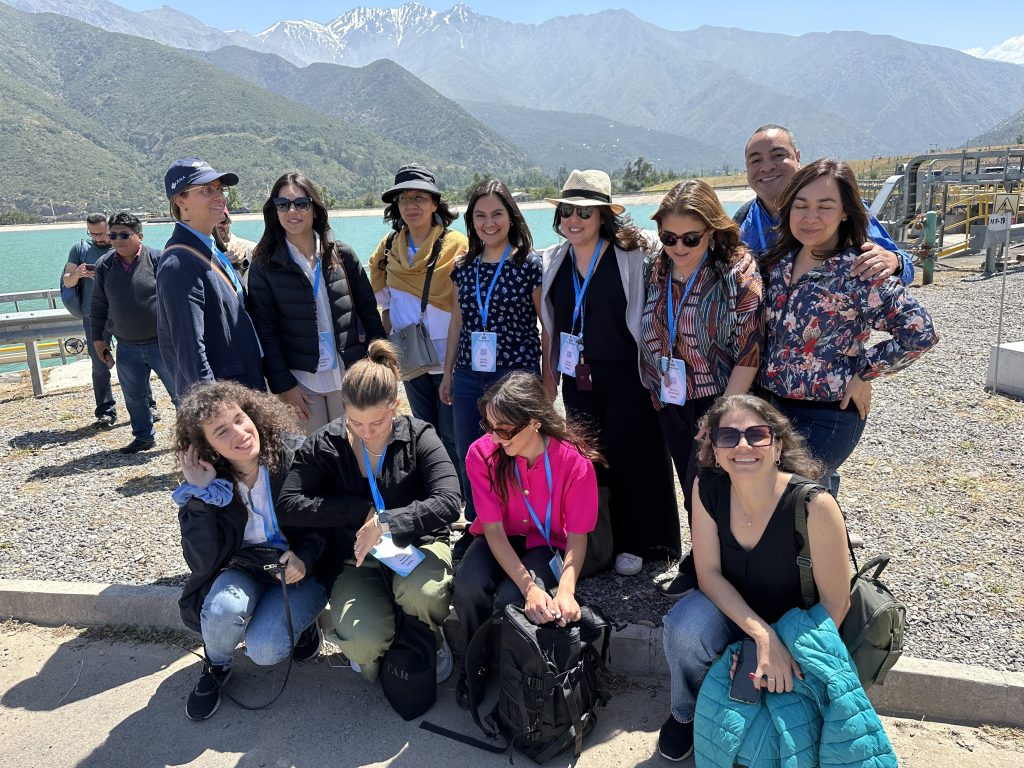
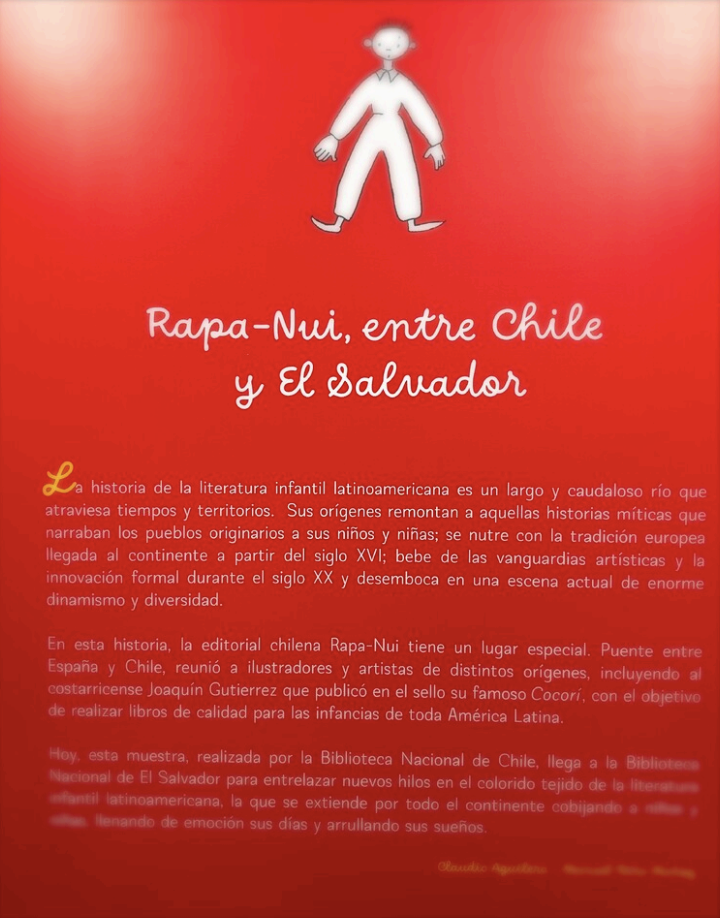
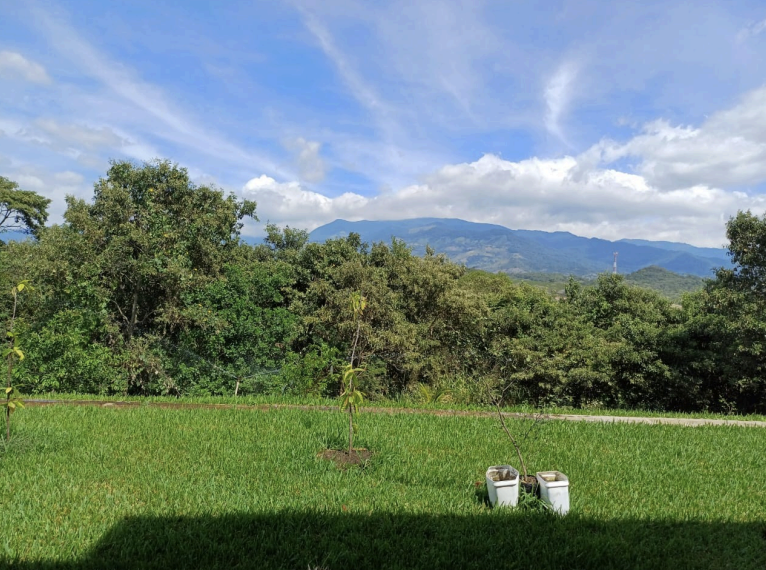
From El Salvador to Chile, this month I am following a path opposite to the Rapa-Nui exhibition of Latin American children's literature. To be in my beloved Central America feels like taking a “Caldarium,” a hot plunge bath in a Roman bath complex—a word I just learned today while trying to make sense of this experience.
The sensation is difficult to articulate: a hard-to-describe mix between the comforting warmth of a bath, the sense of belonging. At the same time, it feels too hot, uncomfortable—painful, to be honest. I start to loose my grip as I descend from the 10,000-foot view of possibilities created by a shifting global financial architecture and my frequent daydreams of a regenerative economy, and come face-to-face with the stark reality of poverty and pain experienced by so many in my young continent.
The deeper I descend, the more I speak with people and listen to their experiences, the more it hurts. My stubborn optimism is challenged, as is my dream of a regenerative future.
This descent into the pain embodied by the Central American people -my people- breaks me open, leaving me defenseless and hopeless. And yet, in a mysterious way, as I accept the sharp sensation of this extreme heat, I find myself bathed in the wisdom of our ancestors—the Toltec, Chorotegas, and Nahuas (the only ones whose language has survived). Their limitless faith in the regenerative power of nature and the Universe (God) seeps into me. And as I stay here submerged in this state, an understanding beyond words floods me—a sense of the complex interwoven nature of our world, our economies, and our centuries-long struggle for social justice.
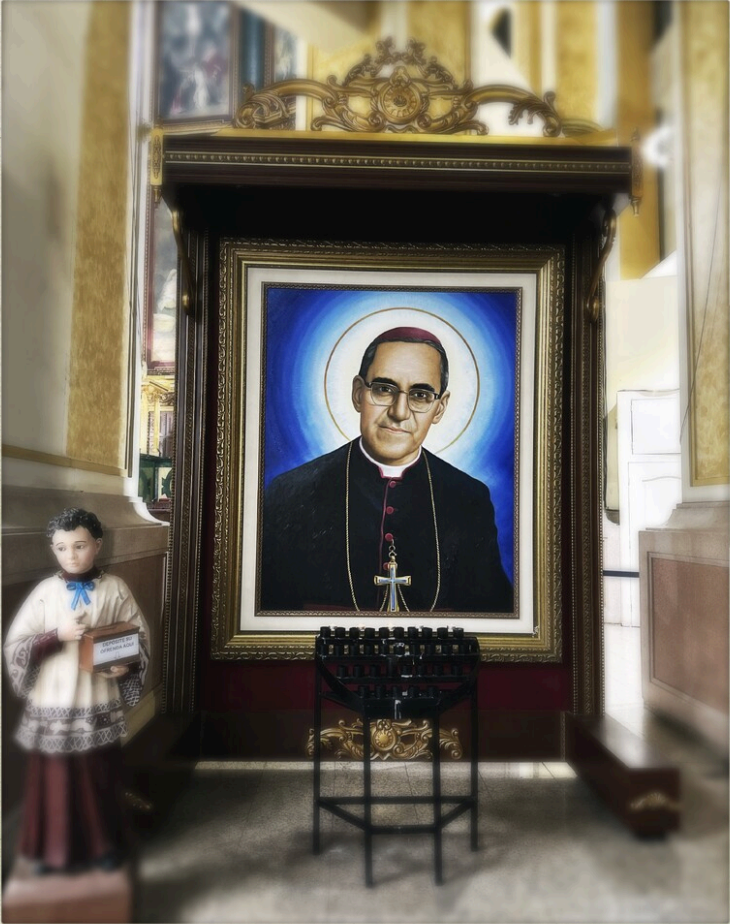
After wrestling with the pain—both from witnessing the struggles of my people and from memories of my own childhood in a country torn by civil war—I finally surrender. I surrender to the wisdom and the infinite power of love. I feel that so familiar mix of melancholy and hope: a bright, profound sense of possibilities that defies and transcends the harsh reality around me, making me feel a peace beyond human explanation.
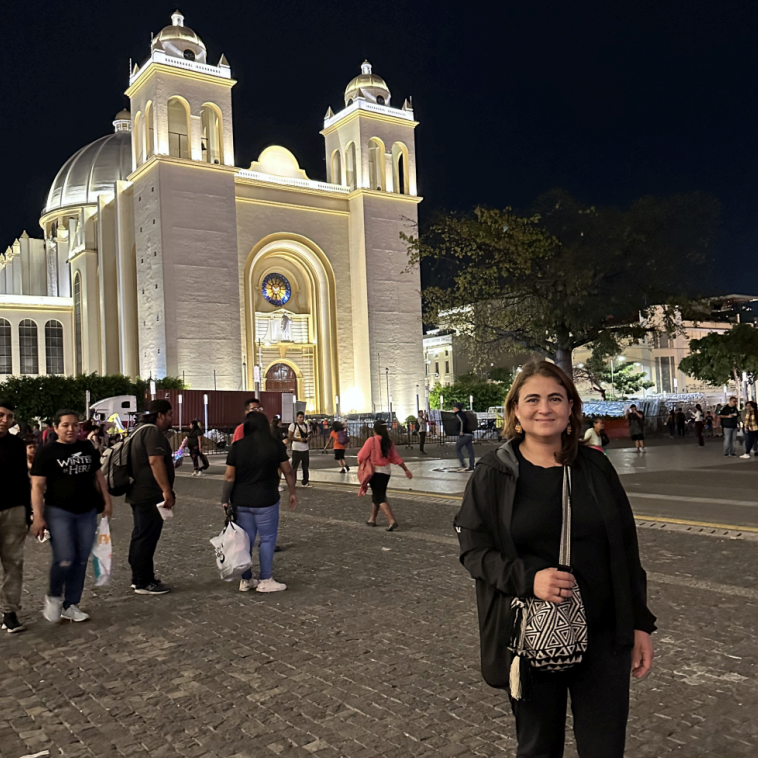
As I surrender, I return home. I remember where I first learned complexity firsthand! This small, fragile part of the world: five tiny Central American countries so at the mercy of global powers, so vulnerable to the fury of natural disasters, and the place where the cold wars of the world were fought by real people. The home that gave me this weird mix of extremely vulnerable yet iron-hard heart to fight for a more equitable world and the home that nurtured my love for impossible missions!
Gracias, mi tierra querida Centroamérica, por recibirme y recordarme de lo que estoy hecha!
Simply Being “La Decrescita Felice”. Italy’s Beyond Growth lessons
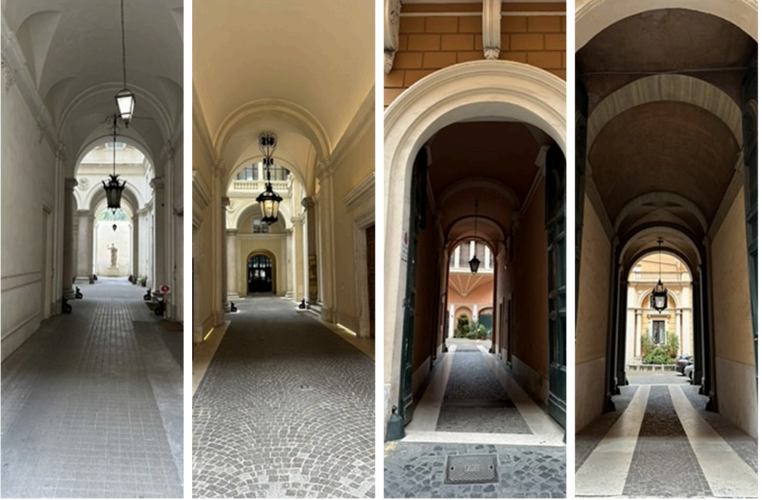
I am today again at Emo’s café, at Via Angelo Emo 12, in front of “il Mercatino delle Rose” and of a beautiful yellow painted villa that I just found out today after looking carefully, is a house whose emblem is a Queen Be!
Isn’t this a sign? and too much of a coincidence? Like a hidden code I was meant to discover only on my 3rd day coming here. A message that needed to be reinforced, after being listening for a week to Jessica Zweig book “Be. A No-Bullsh*t Guide to Increasing Your Self Worth and Net Worth by Simply Being Yourself” and her insistence that to e consistently and unapologetically yourself is the only – extremely painful- yet the only real way to success in whatever you do!
Is it really a pure coincidence? To be here today, taking slowly another coffee and pastry variation (cappuccino e una picolla pasticceria danese), after resisting the urgency to go the Trevi Fountain or to finally go shopping for shoes; all because I decided to listen to that soft voice inside me that said “relax, you are here to be in peace and remember how better is your day after writing your 3 morning pages?”
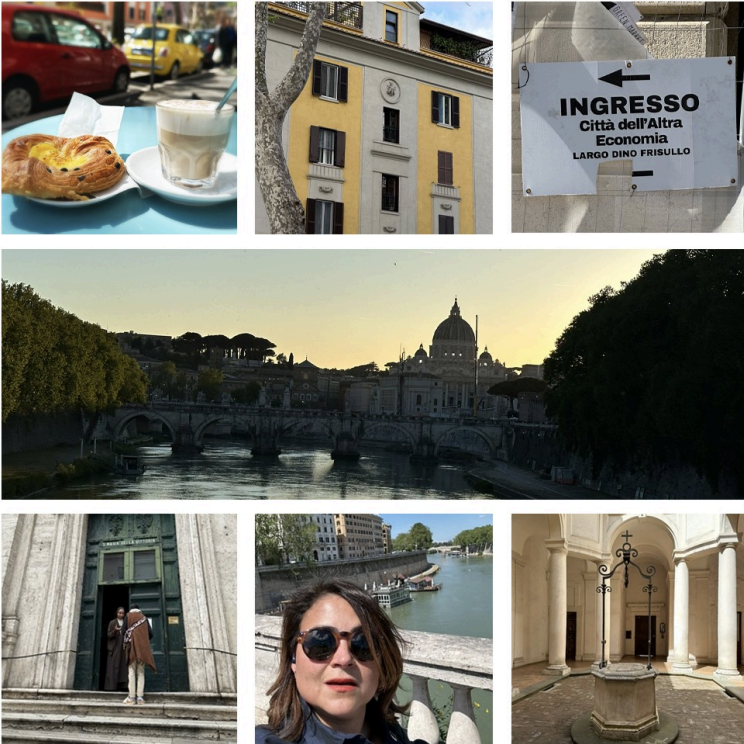
all senses to be in la Bella Roma, the bright sun, the delicious coffee and food, and all spiritual legacy of this city.
And what an impression, to be here, discovering that what has been here for 3 consecutive days in front of me, is exactly that, a call to “simply BE” in house form! And then to complete it, the song of Santiago Benavides “Confía en mi” that calls me again to trust, to avoid rushing into action and to “hamsteren” (Dutch expression for hoarding) more and more work.
And suddenly it all makes sense, all what I have been learning from the audible of Jessica’s book, from Nouwen’s daily meditations about the heart as the center of our humanity, from two days of the “BeyondGrowth Italia 2024” conference, from biking together through Rome with new friends practicing in their own lives the “decrescita felice” (happy degrowth) is interconnected and remind that a more human way of developing at both levels, as economies and as individual human beings, has to do with “simply being you”. Grazie mille guido moraglio y Monica Filippini for your hospitality!
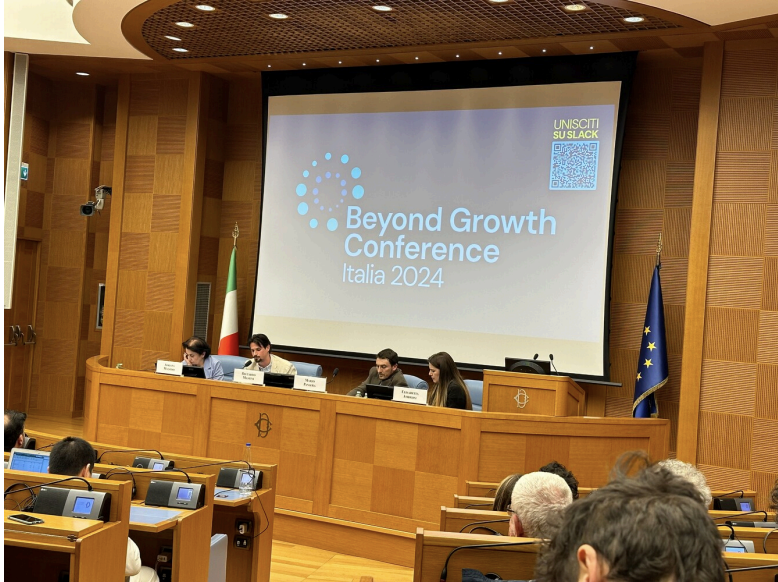
Post-/Degrowth? – You can see the recordings here:
Resting in the trust that we live in a world of abundance, that there is a divine fatherly or an earthly mother PROVIDENCE that has put each of us in this world for a reason, to fulfil a unique and beautiful purpose and that will never, ever, abandon us!
And that once we are and work in alignment with that beautiful purpose, our work is not a sacrifice, it is a privilege and a feast. Why? Because we do not have to frantically push or protect ourselves to achieve it. NO! we are simply then an instrument, a channel for that beautiful and powerful beyond limits creative energy of the universe to become PRESENT, in our own small corner of the world. And then along with others aligned with their own purpose, we in seamlessly effortless harmony, work collectively to drive the deeper structural changes needed in our world.
To simply BE means to leave behind a logic of fear, scarcity, and competition. It requires us to extinguish the fire and the unending thirst for approval (programmed in us unconsciously by our upbringing) that makes us work extra hours, please our bosses and not our clients or the intended beneficiaries of our work and unconsciously let others cross our own sacred boundaries. That unexplainable thirst and deep need of belonging that makes us buy things we don’t need and say and do things we do not really believe in. This is, however, easier said than done.
What does it require? I know by now that although not all of us want to publicly admit it, we all experience that thirst, that fear of not being liked, of being rejected; that anxiety that makes us feel out of place. So, what to do then? What can we do when we are in the middle of it?
I am sure the specific practices that will help each of us are very personal (dance, run, swim, meditate, journaling, talking to your best friend…) yet on a deeper level I believe it all start by allowing ourselves to feel all of our feelings, and slowly descending beyond our heads, to our hearts, the center of our humanness. And once there, to open the doors to God or the Universe, to something bigger than us that love us, and let those feelings flow – researchers say any feeling will only last 90 seconds if we allow ourselves to truly feel it- opening ourselves to the possibility of feeling and seeing things in a new perspective.
Opening ourselves, time after time, to the possibility of “miracles”, defined more recently as a “shit in perspective”. I know that it is not an easy exercise. It requires that wild sea like mix of vulnerability and courage, putting down the walls that protect our ego. Yet, I am convinced that there won’t be any other way to build a more human economy and society.
If we do not combine macroeconomic and structural changes in our public and private decision making procedures, with the urgent healing we all need within; I am afraid that we will never get there! Nor a just transition and neither a regenerative economy. That is why I was so happy to see appearing in February this year the article titled “Healing Systems” on the Stanford Social Innovation Review journal that stated that “Humanity is submerged in layers of individual, intergenerational, and collective trauma, but we generally don’t recognize it. This prevents us from addressing the roots of collective challenges we face and keeps us from taking steps toward healing that can transform the systems around us.”
Yes, we do need a more human capitalism or even altogether a completely different and new order. We do need to put in place some limits to the human tendency of greed and the regulations that guarantee the provision of basic public services and safety nets, and we do need to strengthen government institutions so that they can effectively enforce all of these. However, all of this cannot be a top-down exercise, that ends us in a semi communist system, lethal to human personal development and creativity.
Communism is certainly not the answer. Why am I so sure? Because I, probably different than many of you, have experienced it first-hand. I grew up in the 80’s in Nicaragua, a Non-Aligned nation following the Soviet Union's development recipes and saw the country move back to medieval systems of production and subsistence, causing millions of people to migrate to USA and Costa Rica, all while people traded “lapas” or parrots (the code name for dollars) in the black market.
How do we build economies and societies that provide for their weakest and most vulnerable members? How do we build economies that ensure a minimum base and social welfare, yet do not limit the individual freedom required for each of us to flourish and develop to our fullest unique potential? All in all, how do we build more human economies andsocieties?
There in the word “human” is the crucial factor we often forget. We cannot design transition pathways and reforms without considering these deep human desires and eelings -need for approval and belonging, fear of not having enough – fueling the vicious cycles of ecological destruction and extreme wealth concentration, that a capitalist system simply enables. We need to complement top down policy reforms with bottom up communities of practice that work on strengthening the human spirit and create spaces for healing the trauma of the poor and the Global South created by past injustices, and reconnecting people with nature to all in all, slowly enabling one human being at a time to regain trust in the logic of abundance that created and has sustained our Earth even in spite of our extractive and erratic systems of value creation and economic growth.
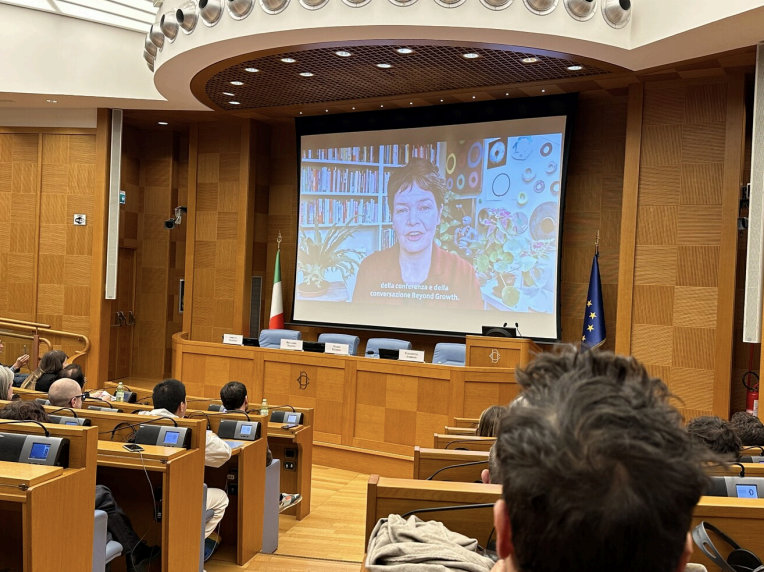
To a great degree, is what the beyond growth movement in Italy is doing. During this conference, they have brought together in dialogue these two movements, the Decrescita and the Decrescita Felice movements. One top down, asking for radical and systemic changes, the other bottom up; bringing people together twice a month to learn how to live degrowth (or what I would call simplicity) at a personal level. They come together to make soap, cook, and share a meal, and once a year to bike through Italy, to see degrowth in action, or what we could also call, regenerative value creation models.
These 3 days of conference, listening and experiencing beyond growth multiple narratives and practices, listening Italian all day and experiencing the joy of Italian hospitality, has left my brain tired but my heart and spirit invigorated from understanding how they see and are implementing a more #human centered way of living and developing 💙 💚 !
I will go back home with more questions than answers. Because some of the opinions shared by activists about the new green wave of colonialism (including the Nature-based Solutions hype I am active part of) or the statements of academic researchers about the need to leave the provision of public services to the state, without private sector intervention; has got me thinking and honestly doubting. How do I make sure I am not putting my skills to the service of more harm than good?
Questions about how and if we should monetize the benefits of ecosystems and ecosystem services, and finance conservation projects making use of carbon or biodiversity credits, or impact financing in general? Can we make use of these innovative financing mechanisms and still be true to the logic of life? How can we apply them making sure these projects are developed with local communities driving decision making? And how can we realistically measure impact and progress on human and natural metrics, or how Kate Haworth beautifully phrased in her keynote as " life in its own terms"?
And at the same time, I am going back home with some deeper questions answered. More centered and at peace, with my choice to take this year or at least half a year, to slow down. To focus on what really matters according to the logic of my heart and laser-focused on the long-term impact and mission I dream to achieve… resisting my natural tendency to please and to close partnerships, my insatiable curiosity and thirst of learning new things, and my human fear of not having enough.
I go home with the firm resolution to, time after time, return to my center, and unapologetically dare to be my true self, resting with full trust in the abundance of the divine providence and simply BE!
Climate action: do wet let fear or love drive us?
Looking back to my first New York Climate Week I have mixed feelings.
Joy, hope and excitement from meeting so much wonderful people and leaders from the Global South and North alike and from important milestones such as the global launch of the recommendations of the Taskforce on Nature-related Financial Disclosures (TNFD).The rate of representation from the global South is definitely improving and events like Project Syndicate "Climate and Development Finance: what works" and the Brazil Climate Summit where diversity and inclusion felt authentic and we had the opportunity to discuss very openly the challenges of making a green transition work for everyone, leaving no one behind.
To witness Brazilians, male and female in equal parts, of different generations and ethnicities working together and claiming the global leadership they deserve, made me very hopeful and proud of being Latin-American. And from the rich discussion we had with private sector sustainability pioneers it quickly became clear that universal access to water and sanitation is clearly one of those win-win investments that ensure a high impact multiplier in terms of both environmental and social goals.
This is also our conviction at WaterEquity and we admire the leadership Brazil has shown with the new regulatory framework and the approval of the new 2020 sanitation law. These new rules underpin a push by Latin America’s largest economy to upgrade its underdeveloped sanitationsystem – an effort that will require investments of more than 700bn reais until 2033.
Another event that made me feel as if history was been written in front of my eyes and that Global South voices were finally being heard was the High Level Summit on Climate Mobility and the incredible wave of solidarity towards SIDS and others at the frontline experiencing the impacts of climate change and sea level rise from presidents and philanthropic organisations from around the globe. My respect and admiration to the Global Centre for Climate Mobility that has managed to set this solidarity wave in motion and has on a timely manner developed a much more well informed and human narrative around climate-forced migration, reminding us about our shared humanity and requesting us to focus on "people positive" climate adaptation. While migration can strain local governments and communities, mobility can also be a tool for climate adaptation and in some cases might be the only option.
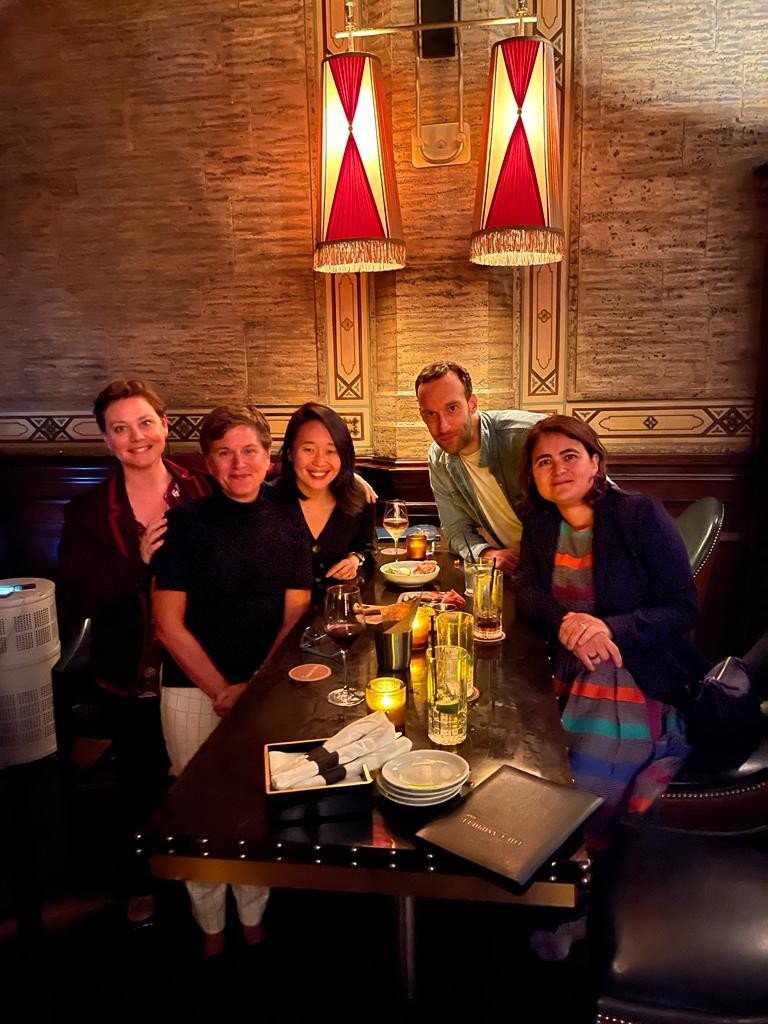
Less of a public moment and yet so inspiring and recharging was to meet Salzburg Global fellows and hear how they are advancing their various missions in enabling communities to access finance for affordable housing, water and health services. Great to see you Kimberlee Cornett, Tee (Terisa) Thomas , Murray Gray, Sherry Wang. We missed you Jean-Philippe de Schrevel and Suzanne van Tilburg !
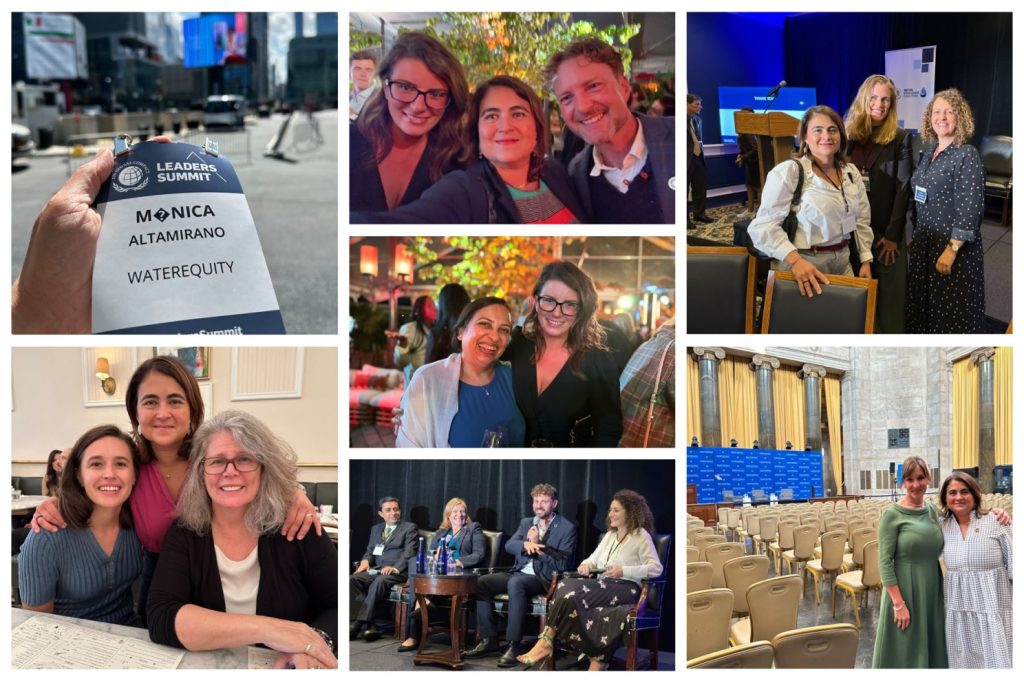
All in all, throughout the week, the greatest source of hope and pride of my first New York Climate Week has been the privilege to be part of the WaterEquity delegation that along with colleagues from our sister organisation Water.org and strategic partners from the private sector managed to position water investments- both investments on access to water and sanitation as well as water security to ensure climate resilience of communities, water supply systems and watersheds – as a crucial pillar of a just climate transition.
Together we also managed to highlight the great potential of market-based approaches and impact investing to solve the water crisis, provided of course there is a proactive regulation approach from governments that look after the more vulnerable and underserved groups in society.
I personally believe that market-based instruments are a deep leverage point. Why? because if well designed focusing on enhancing the coping capacity and wellbeing of the communities living in the most vulnerable conditions in relationship to climate change, they activate three mechanisms:
Number one, what is obvious, they remove the external barriers that keep billions of the world population in poverty such as access to finance, technology, and education. Number two, they enable the channelling of additional sources of finance in ways that also guarantee a high level of quality of the investment projects and new infrastructure to be built.
Number three and probably the most powerful of all mechanisms, by offering millions of people (households and companies) traditionally marginalised from the financial system an opportunity to exert choice and practice self-confidence, by taking a loan and building a track record and creditworthiness. Is this last mechanisms that enables these local actors to be the engineers of their own future and just like that the most important barrier locking people into poverty in both the Global South and the Global North alike is removed, that of thinking you CANNOT do it, you ARE NOT WORTH it, you DON’T HAVE a CHOICE.
After nearly half a life working in development and on different economic sectors (education, road infrastructure, water infrastructure and environmental sectors) I think that the most important flaw of development finance and development cooperation has been the way this “help” is delivered. The mechanisms by which finance and technical assistance are delivered and the attitude these mechanisms encourage or at least do not manage to prevent, erode often the self-worth and self-confidence of those receiving it. “They” “the poor” are seen as a problem to be solved, and believe me, this "subtle" message is clearly received and viscerally felt.
As we concluded during the #UN2023WaterConference event were together with the Global Water Partnership, Danone, Inter-American Development Bank, Veolia , The Nature Conservancy, Gobierno de Chile, Foreign, Commonwealth and Development Office, WBCSD – World Business Council for Sustainable Development, and Saguapac we launched the RETHINKING coalition, we see instead communities living in vulnerable conditions as markets to be served and a rich ground of diverse and limitless capacities and assets in place where ANYTHING is possible.
These are two principles of regenerative economics and design that I love and believe absolutely in:
⁃ Empowered participation – where everyone in a society is given the chance to participate on giving the solution to common challenges.
⁃ Focus on the potential on a community and a place, and in this way “problems” disappear, vanish and magic happens!
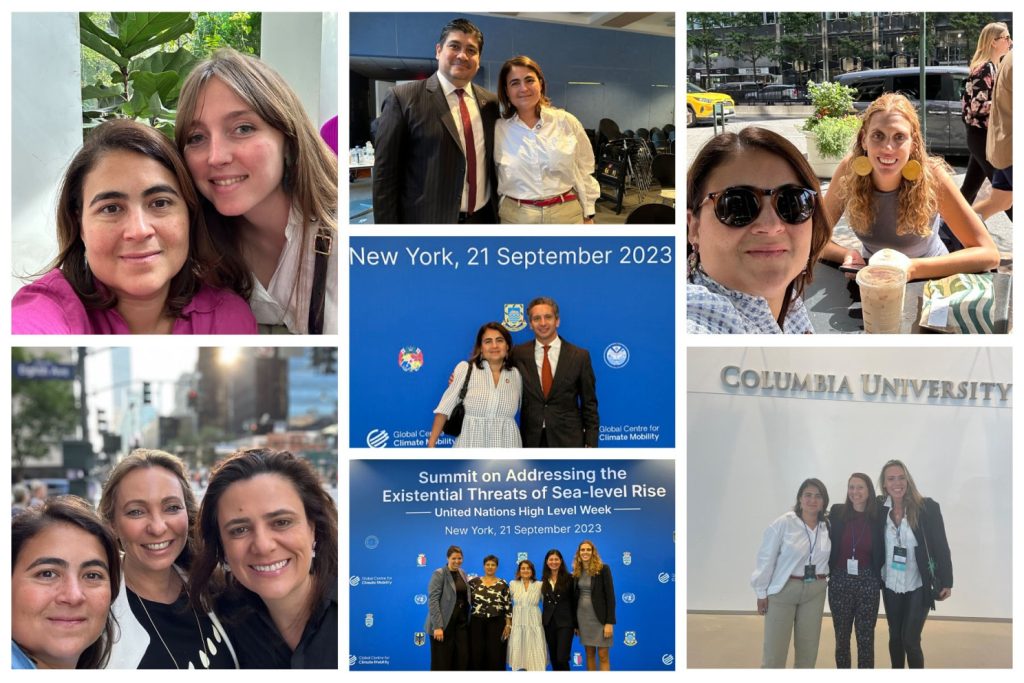
Tarcila Ursini, Giuliana Ortega, Roberta Pêgas, CCEP-I, Jeso O'Neill, Gina Zanolli, Rosemary Gudelj, Jehanne Fabre, Genevieve Edens, Una Hrnjak, Paul O'Callaghan, Kamal Amakrane, Sarah Rosengaertner, Laura Basco Carrera, PhD, Garance Aulagne, Dr. Raphaela Schweiger, Catherine Colyer, Elan Emanuel, Howard Deans, Talua Nivaga, Aaron Vermeulen, Illya Azaroff, FAIA, Uwe Steckhan, Mille Bojer, Erik Bruun Bindslev, Kate Hughes CBE, Andressa de Mello, Diana Eggleston, Miriam Shapira, David Lönnberg keep rocking! Thank you for shining your unique light when is most needed!
Estimado Señor Ex-Presidente Carlos Alvarado Quesada no tengo palabras para expresarle mi gratitud por recibir a mis hermanos Nicas. Por siempre GRACIAS!
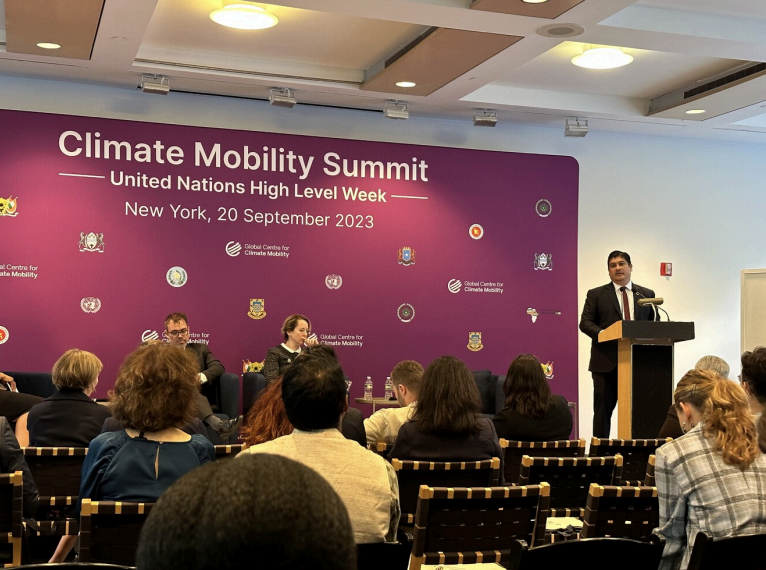
However, If I am truly honest to you all, there is also a growing silence and doubt as I think back and try to answer myself whether we will make it, as society, global economic and humanity. Why?
While I trust in the capacity and good will of each of the single leaders and colleagues I met, from all, public, private and civil society sectors and after getting to experience their unique light and commitment in person I get to feel optimistic and think YES WE CAN DO IT!
The truth is that when I take the time to look at those unspoken patterns, the elephants on the many “high level meetings” and zooming out to assess whether all wheels are in place and they are working together and going into the right direction in the required tempo and harmony for this movement to become of atomic potential, I loose some of my optimism.
We seem to be building new “castles” following old patterns, without taking the time to “wonder”, to challenge “common sense” (echoing the words of Jennifer Kenny M.Sc. D.I.C. (She/her)) and leave behind the mechanistic view of the world we have been obsessed with since the industrial revolution. We seem to be very effective and rushing to sketch new maps without a collective recognition in true humility that maps no matter how good we get at drawing them, they will NEVER BE the territory (echoing the words of Nora Bateson ). Our planet is ONE and whole, yet we are obsessed with administering it within the silos that give us the illusion of control and power.
When will we reach the collective recognition in true humility that we need a complete new logic of development to build a world that is worth living for our children and our grandchildren? The streets of Manhattan and so many homeless people that have lost their mind were a reminder of the unviability of our economic models that I can’t still get out of my mind.
While, I see more and more authentic courageous leaders in these high level meetings as a reason for hope, I start to doubt there are enough organisations and institutions willing to reinvent themselves to enable all that wonderful individual potential, courage and commitment to add up and turn the tide towards a new truly regenerative order.
How many more floods, fires and days zeros do we need to experience before we fall in our knees and acknowledge with humility and repentance (echoing the beautiful opening words of Andrew Roby BEM for COP27 session), that we have got it wrong and we need to forgive ourselves and each other and start from scratch again?
My resolution: to work both in my day job as in my personal interactions to build more and more bridges between seemingly “unrelated” worlds and partners, and remind myself and those I love that FEAR and the desire of control and power it fuels in us is never a good advisor and that the only voice that can lead us to our greatest potential is that one of pure unconditional LOVE.
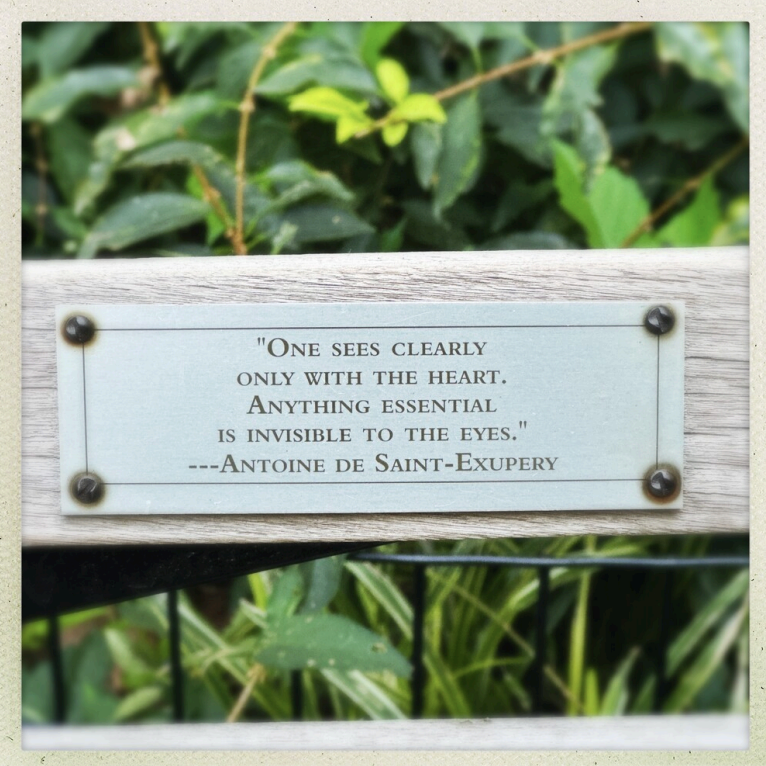
What made you optimistic? What gave you reasons to doubt? Which commitment do you feel TODAY more than ever motivated to fulfil?
My journey towards purpose and true belonging
Last January 2022, when I was just at the start of my adventure of being an independent consultant associated to the NOW Partners Foundation network, the recognition given by the World Bank to my call for call for a shift in our economic development paradigm and our investment planning processes by selecting my blog "Empowering local people to engineer their own futures" into their selection of 5 blogs that shaped the infrastructure community thoughts in 2021, was a great signal that I was on the right path. The path of pursuing my life purpose.
That was the start of a truly special year. A year of finding myself, rediscovering all the love around me, but also a year of "standing on my own". A year where I finally learned to embrace beauty in whatever shape and form it came, to trust God's timing and remember myself to "rest, rest, rest", lowering my resistances, silencing my judgements, and trusting the powerful energy of love that called me to be, to take care of me and guide me, every step and day at a time, to that life of total fulfilment and purpose.
A great memory of 2022 that summarizes it all? On November 2022, while attending COP27, I had the opportunity to experience and do for real what has been my journey the last 2 years: Walk my way out of slavery (metaphorically) and towards freedom. Freedom from the approval of others, of my certainty and stability, of the power of the majority and seeing God (the Universe or how you like to call it) coming to my encounter, opening this sea of my own fears, one step at a time, and welcoming into his land of infinite unconditional love and absolute freedom to be the one and only Monica he dreamed of before I was born.
After discovering amazing entrepreneurs and leaders on the regenerative economy space through beautiful deep exchanges through the NOW and For Good Leaders network, I developed a completely different view of start ups and a huge admiration for all those who leave everything known to them, say goodbye to their golden cages and throw themselves into the deep abysm. Through their courage and capacity to find power by standing on their own, they inspire others and drive a great wave of more and more people following their purpose and in that way they drive systems change.
Having made that first step of jumping into the abyss of the unknown to follow a long postponed dream -that of driving a shift from budget- dictated siloed planning towards mission-oriented investment planning and procurement- I came across the work of WaterEquity. I started working with this wonderful team in May 2022 as their climate and infrastructure consultant. I have enjoyed every bit of this experience! During the last months of 2022, I took the time to discern whether I wanted to follow the example of inspiring leaders as Felipe Villela or many others I met the last years and build my own company or join an existing team and from within drive the systemic change I dream about day and night.
To make my choice, I needed to answer to myself three questions:
- Can I belong to a team and yet keep working towards my purpose?
- Can I use all of my talents and my systemic lens in a finance job?
- Can I make use of my understanding of ecosystems as critical infrastructure networks in the assessment of infrastructure investments in water and sanitation?
Can I belong to a team and yet keep working towards my purpose?
After much reflecting on my past, conversations with friends and timely inspiration from books and motivational videos, my final answer was: yes, I can! It all depends on the culture of the organization and the limits I might be unnecessarily putting to myself. I have experienced the last months a work culture that deeply values diversity and inclusion, and leverage them to deliver transformational impact for the communities living in the most vulnerable conditions around the world. And as for the limits I have unnecessarily put on myself, I will keep reminding myself everyday the two beautiful quotes below about true belonging and the need to keep my focus on BEING who I am, instead of solely WHAT other need me to be. Because the true ME and the true YOU is exactly what the world needs.
- "True belonging is the spiritual practice of believing in and belonging to yourself so deeply that you can share your most authentic self with the world and find sacredness in both being a part of something and standing alone in the wilderness. True belonging doesn’t require you to change who you are, it requires you to be who you are" (Brené Brown, Braving the Wilderness)
- "We focus too much on live on WHAT we want to be, as opposed to WHO we want to be. We have always been told that jobs, lives and careers are like boxes and containers. There is only a finite number of options. But the true is that there is NO formula, NO pattern. If you do know, do not trade WHO you are, for WHO you think the world needs. Because the world needs you to be you!" (Jay Shetty)
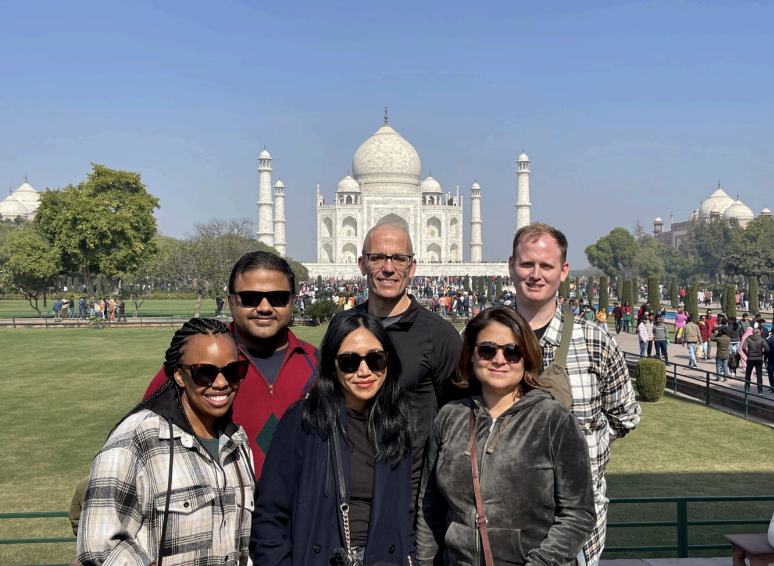
Can I use all of my talents and my systemic lens in a finance job?
And can I make use of my understanding of ecosystems as critical infrastructure networks in the assessment of infrastructure investments in water and sanitation?
After many years working on financing water security and adaptation to climate change and understanding more and more the role of natural infrastructure and nature regeneration, which is sometimes put as in juxtaposition or phrased as Nature-based Solutions versus traditional infrastructure, I must recognise I was a bit hesitant to go fully back into traditional infrastructure investments for water and sanitation.
However as time passed by, I learned that as we are moving towards a more systemic approach to impact and resilience at WaterEquity, and the deeper we go into what makes a good truly resilient and sustainable water and sanitation infrastructure investment, the more we come in contact of the whole issue of nature regeneration and a regenerative economy.
You must be wondering why?
To start, because an essential step to make possible the life of 8 billion people on earth and give them universal access to water and sanitation – which we all agree is a basic human right and we all agree is essential to any of the human development goals- in a regenerative way is: a) to ensure there is enough wastewater treatment capacity and b) each WASH investment done is truly sustainable, well thought for the whole useful life of that asset and considering the watershed scale.
The second lesson I have learned is that there is not such a thing as green versus grey infrastructure. There is only such a thing as well planned, well managed, good quality infrastructure. And while it is essential to consider the role of ecosystems in our assessment of climate risks and climate resilience, we also need to consider the role of WASH infrastructure in our regeneration efforts as the right infrastructure capacity to treat wastewater needs to be in place for those ecosystems to thrive and regeneration efforts to be successful.
I came across one of the best example of this mutual dependence during The Global Impact Investing Network summit this year, where I learned about MAR+Invest financing platform and their efforts to restore the Mesoamerican reef. I learned that their regenerations efforts will fail if there are not enough timely investments on wastewater treatment capacity to serve the tourism industry and other economic activities taking place along the coast.
And in the same fashion, if we talk about healthy watersheds, efforts to increase access to sanitation that are not accompanied with well thought through lifecycle assessment ensure sustainability in operation and maintenance of these assets, then this good intention could end up on higher levels of river pollution.
I have understood that the trade-off or the dilemma is not really green versus grey infrastructure. The real and deep leverage point we have is on the way we plan our cities, our economies, and how we shape and plan each of our investments across multiple sectors. So the real challenge is not whether we should invest or not on some of traditional man-build infrastructure versus Nature-based Solutions, and requires us to zoom out and ask ourselves, which economic visions do want to hold true for the future? and how can we working together more synergistically support local communities and governments in planning and financing these regenerative futures?
Summarising, my final answers to the two questions above were yes. System thinking is crucial for the future of impact investing and our planet, and now is the right time to use it not only to finance change but to change finance.
And as for the how to use my understanding of ecosystems to assess water infrastructure investments? I have understood that the trade-off or the dilemma is not green versus grey infrastructure. I believe we have a much deeper leverage point on the way we plan our cities, our economies, and how we shape and plan each of our investments across multiple sectors. So the real dilemma we face is not whether we should invest or not on some of traditional man-build infrastructure versus Nature-based Solutions. To identify crucial trade-offs requires us to zoom out and ask ourselves collectively: which economic visions do we want to hold true for the future? And once we answer the WHAT, the next crucial question is HOW: how can we work together more synergistically support local communities and governments in planning and financing these regenerative futures?
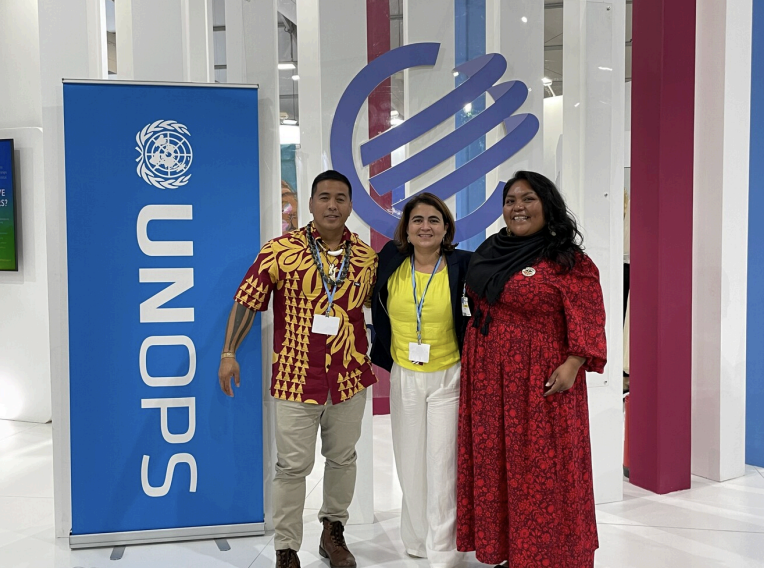
Mobility Pavilion. The conversation with them changed forever my view on investment
planning and challenged deeply my well intentioned ideas of how to advance diversityand inclusion
It took me some time, a silence retreat, multiple conversations with friends (Thank you dear friends! ¡Gracias queridos amigos!) and months of discernment but I made a decision I am very happy with. I feel grateful and excited to start this new chapter of my life, joining WaterEquity's team full time as Director, Climate Impact. I look forward to continue working with this dream team to develop further our infrastructure and climate impact strategy by connecting with the pioneering investments and expertise on the climate, water resources management and regeneration communities of practice. By embracing this collective intelligence and the complexity this might entail, we can make sure everyone of our infrastructure investments achieve the highest multiplier of impact for those living in vulnerable conditions and the health of our planet.
I also look forward to working with strategic partners to advance a truly systemic approach that recognizing our radical interdependence is able to adopt an approach, where multiple seemingly contradicting statements can hold true. An approach where the objective is find the right balance between apparent opposites, instead of a myopic X or Y thinking. Here some examples:
- Infrastructure or Nature-based Solutions. The reality is again that we need both, and the effective implementation of each of them, depends on the effective design and planning of our infrastructure investments across all economic sectors.
- Public versus Private. If we leave behind ideologies, focus on the societal outcomes we want to achieve the sustainability on service delivery required, we might come to a whole range of hybrid public-private options for effective implementation and financing at system scale.
- Economy versus Nature. I truly believe we can, if we set ourselves to, develop a healthy and regenerative economy where we have both economic wellbeing and nature restoration.
- Cooperation versus Competition. Both are necessary to solve the multiple societal challenges we face. Competition between companies is not a problem in itself and it can be a great incentive for innovation. Whether this innovation will have the impact we require, depends on whether competition is balanced with cooperation at higher levels that enable the solving of collective challenges and well designed government regulations ensure altogether these companies deliver the societal outcomes the world needs.
If you happen to be working on any of the following topics, drop me a line. (Disclaimer: it might take me some time to reply, have me patience.)
- advancing the development of truly sustainable and resilient infrastructure
- SDG6, water security and regenerative economy business models for emerging economies
- closing the gap between strategic planning and investment planning
- development of blended finance strategies to make strategic use of public and private as well as different thematic finance streams to unlock the full potential of private sector participation – finance and ingenuity- for the delivery of societal outcomes
- the development of a transformational pipeline of investments that embodies a water-climate-nature nexus approach and the recognises the true value of water.
To finalise, I would love to hear from you and your own journey towards finding purpose and belonging.