
Head, Heart and Hands: Coming Home from Terras, Tuscany
Just got home, tired and sleep-deprived from so much socializing, yet still feeling energized from within and hopeful after Terras.
For some reason, my second time feels even better than the first.
As I reflect on the conversations, laughter, insights, vulnerability, and inspiration of the last days, I find myself organizing my thoughts around the three Hs that Emily Farnworth shared: Head, Heart, and Hands.
Head
Through the different panels—and especially thanks to the remarkable analysis of the evolution of sustainability professionals and future trends presented by Kurt Harrison—one of the most hopeful realizations I am bringing home from Terras is the feeling that we may already be approaching an inflection point.
Perhaps things will have to get worse before they get better, as is often the case with major transitions. Yet even in the United States, despite political headwinds, investments in renewable energy continue to grow. That alone suggests that economics are increasingly driving decision-making.
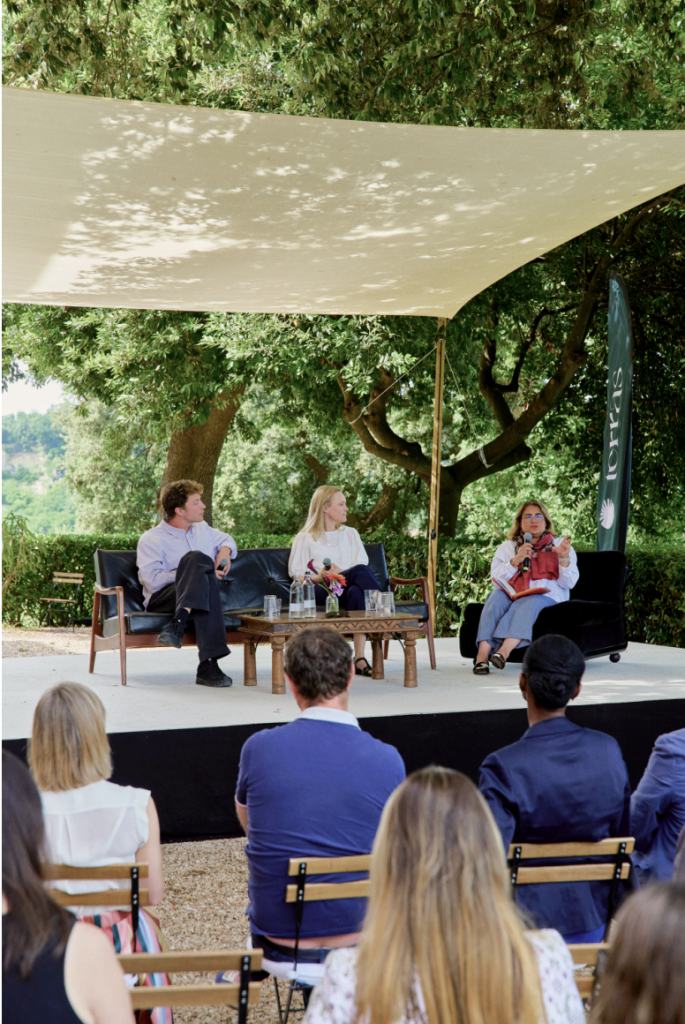
It is no longer primarily about moral righteousness—a framing I have never been particularly fond of. Economics are increasingly leading the way. Thanks to years of investment in research and innovation, and partly because a disrupted water cycle is creating greater climate volatility, the economics are increasingly favoring circularity, sustainability, renewable energy, and resilience.
Orders for electric vehicles continue to grow because, for many consumers, driving electric is simply becoming more economical than driving on gasoline. I see this myself when managing our household finances: the savings from our hybrid vehicle are significant.
The economics of resilience are also evolving—from a narrative of cost avoidance to one of value creation. Through lower financing costs, improved asset performance, greater operational reliability, reduced water risks, enhanced supply chain stability, higher land values, and, perhaps most importantly, increased insurability, investments in resilience are increasingly demonstrating tangible value.
And while one could become cynical and argue that this is merely market logic at work, systems thinking suggests something different. Once the right reinforcing feedback loops are established, they begin to accelerate change on their own. If that is the case, we may finally be setting larger systems in motion in the right direction.
This is certainly no reason to reduce our efforts. But perhaps it is worth entertaining the possibility that we have already won an important battle.
Alongside this, sustainability—difficult as this may be for some professionals whose roles are changing or even disappearing—appears to be becoming increasingly embedded within core business functions. It is no longer a corporate social responsibility initiative sitting at the margins; it is becoming part of the operating system of the company.
And perhaps that, in itself, is evidence that the business case has been made. Sustainability is increasingly becoming part of how companies operate, innovate, and compete.
As a guest to the ESG Decoded podcast hosted by fellow Terras participant Emma Gillespie Cox stated, there is something powerful about ambitious constraints. When engineers are challenged to design within environmental boundaries, or when organizations genuinely embrace circular economy principles, they are often pushed toward disruptive innovation. Sustainability is not a charity case. Increasingly, it may determine whether a company thrives in the emerging economy—or disappears.
Another insight reinforced my belief in mission-driven investment planning.
Marisa Drew spoke about the importance of setting a target and articulating a clear vision of where a company, city, or community wants to be. Once a compelling vision is established, people begin to organize around making it a reality.
Having a North Star matters.
It was also encouraging to see actors across sectors rethinking their roles, including the insurance industry. Many are seeking involvement much earlier in decision-making processes, contributing their expertise during investment origination and helping strengthen collective intelligence from the outset. That is precisely where I believe we need to go.
After all, as we concluded during the panel on resilience in a disrupted market, the most interesting question is no longer: “How do we price climate risk?” but rather: “What institutions, financial structures, and governance systems are needed when climate volatility becomes structural?”
Beyond that, it is becoming increasingly clear that the leaders of the future—operating in a world defined by uncertainty and volatility—will be systems thinkers. They will be people capable of embracing complexity, understanding the interdependence between water, energy, food, insurance, financial, and community systems, and building bridges across sectors and stakeholder groups.
Their role will increasingly be to align incentives across actors and scales, working at watershed and landscape levels rather than focusing solely on asset-level optimization.
Heart
What moved me most was not only what I learned, but who I learned it with.
The level of people at Terras is incredible. Many hold top leadership positions in corporations that, to a large degree, help shape our world.
And yet, most remain remarkably humble and grounded in purpose, perhaps because they understand the immensity of the challenges ahead.
What surprised me most was the genuine spirit of community that seems to be emerging.

Many of us commented on Marvin Rottenberg’s remarkable gift for spotting talent, but perhaps even more importantly, for recognizing a rare combination of confidence and humility in people. Looking around the room, I could see what they meant.
I found myself deeply grateful for the quality of the conversations—not only about sustainability, systems change, and the future, but about life itself.
It was wonderful to be inspired and challenged intellectually. But it was equally meaningful to laugh, take “natural looking” pictures, and share moments of profound vulnerability about our journeys, doubts, losses, hopes, and dreams.

And yes, dancing La Samaria while singing “Yo Soy de Aquí,” expressing with all my heart how proud I am to be Central American and therefore “Caribbean”, alongside the incredible dancing king Philippe Vedrenne, was absolutely priceless.

Those moments matter too.
Perhaps more than we sometimes admit. What I personally enjoy about dancing is that dance is a universal language, one where hierarchies and titles are set aside and you can simply experience people’s energy.

Hands
And then comes the question: what do we do with all of this?
For me, the answer starts back at the office.

It starts Monday by inviting pioneers from the public and private sectors to join our NetworkNature Mission-Driven Investment Planning bootcamps in Bari and Dortmund, while continuously curating and nurturing brave spaces where people can rethink and reimagine the future together, backcast from that future, design the infrastructure systems needed to achieve it, and then engineer pathways to implement, fund, and finance them.
Because ultimately, that is what this transition requires.
As Marisa said, you set a very ambitious goal, take a leap of faith, and then get to work.
You commit to a future that does not yet exist and begin building it anyway.
Maybe that is the invitation I am bringing home from Terras.
To spend less time focusing on what we fear and more time focusing on what we want to create.
To be bold enough to articulate ambitious visions.
To trust that collective intelligence can emerge when we gather with purpose.
And to remember that transformation begins when we decide to move— from ideas in our heads, to conviction in our hearts, and finally into action through our hands.
It is about time. For us and for the seven generations to come, it is really time to put more attention on what we want to see and to create together.

Empowering local people to engineer their own futures: a new infrastructure planning approach
Climate change is challenging our status quo as the frequency of extreme weather events keeps increasing. Water scarcity could cost some regions up to 6% of GDP and floods could force hundreds of millions of people from their homes by 2050. At the same time, we’re facing a $15 trillion infrastructure finance gap.
If these challenges weren’t enough, the COVID-19 crisis reminds us that a shift in our economic development paradigm is urgent.
How can we deal with these interlocking challenges in a context of diminishing public resources? How can we make sure our investments to stimulate economies don’t lock us into the present, but enable us to leapfrog to a regenerative economy?
While the answer is simple, its implementation is not. As urged by the Global Commission on Adaptation, we need three revolutions: in understanding, planning, and finance. An effective place to start is to challenge the way we invest and rethink our planning processes.
Local project preparation capacity as major bottleneck
Multiple innovative financing facilities and instruments like green bonds have emerged. The private sector is acknowledging that nature—not governments—has the real license to operate and is willing to invest beyond fence lines. A new generation of impact investors has emerged. Governments and donors have developed blended finance strategies.
As promising all this sounds, we aren’t quite there yet.
First, most efforts are designed to fit our traditional siloed investment models. Financial metrics favor traditional monofunctional, centralized, and grey infrastructure assets—not the adaptive, multifunctional assets we need.
Second is the challenge well-known to PPP practitioners and the closing hymn for most conferences I’ve attended the last five years: “the problem is not available financing, but the lack of well-prepared bankable projects.”
The main bottleneck remains local capacity to structure bankable projects with a clear theory of change, fit for an era marked by uncertainty.
Rethinking deal origination
As promoted by the Task Force on Climate-related Financial Disclosures, the climate impacts caused by investments as well as impacting them need to be considered. As most climate change impacts will be channeled through the water cycle, to develop future-proof infrastructure we need to start with strategic planning processes that consider the dynamics between infrastructure and ecosystems at the watershed level.
Then how do we generate sustainable, resilient investments while reducing transaction costs? We need a different approach to investment origination.
Yet the reality is, even for old standards, most developing economies have poorly developed strategic planning and project preparation capabilities. This is a challenge, but also a tremendous opportunity for renewal. I’m betting for the latter!
Financing Framework for Water Security
Being from Nicaragua, the second poorest country in Latin America and among the most vulnerable to climate change, I’m passionately committed to make adaptation financially feasible for developing countries like mine.
Inspired by the Netherlands’ expertise on strategic planning, in 2015 I started to develop an alternative approach to investment planning and capacity development: Financing Framework for Water Security. It’s been applied in seven countries in Latin America, Asia, and Europe and supported by the European Commission tailored to nature-based solutions.
I dream to improve the living conditions of millions by setting in motion the development of a transformational pipeline of nexus investment projects.
How? I want to achieve this by offering a decision support tool and training for government and community leaders that empowers them to make autonomous and well-informed choices—not only those they want, but how to achieve them themselves. This grants back their birthright of being the engineers of their own future.
We enable local actors through both system analysis techniques to zoom out and institutional economics and project finance techniques to zoom in to the nitty-gritty contractual design details for successful, cost-efficient implementation.
The first set of techniques enables them to embrace complexity, deal proactively with uncertainty, and develop a sound rationale for investments to convince higher levels of governments and attract the interest of climate funds, donors, and impact investors. A systemic understanding of costs and benefits is the base for developing a blended finance strategy.
The second set of project preparation techniques guides them in the design of fit-for-purpose implementation arrangements, while collecting evidence to make a business case of project clusters or deals prioritized for implementation in the short term.
This enables decision makers to choose project delivery and finance mechanisms not by dogma, political orientation, or chance—but by autonomously choosing from a large range of options, including 100 percent publicly funded and financed implementation arrangements to fully private initiatives. Choosing what best fits the transaction characteristics and the service level they need over time, is viable in their institutional setting, and is most effective in ensuring long-term financial, institutional, and service sustainability. Early private sector engagement and transdisciplinary collaboration catalyzes financial innovation.
Working together in a transformational recovery
If we want to ensure a transformational recovery, we must work together to strengthen local capacities and translate the inspiring yet often myopic narratives of a blue, green, or digital recovery into sound, contextualized investment pipelines.
We need coordination between global and local actors to develop a level playing field for private engagement at scale in a new generation of nexus investments that embrace a regenerative value creation logic. Scarce concessional resources should be used catalytically to reduce transition risks and transaction costs.
Disruptive technologies such as blockchain and digital twins can also reduce costs and enable more trustworthy exchange mechanisms and governance structures for collective investments in adaptation.
In an era of uncertainty, the message is clear: we need to empower local actors to engineer their own future.
Disclaimer: The content of this blog does not necessarily reflect the views of the World Bank Group, its Board of Executive Directors, staff or the governments it represents. The World Bank Group does not guarantee the accuracy of the data, findings, or analysis in this post.
A Milestone for Europe’s Water Future: Reflections from the First EU Water Resilience Forum
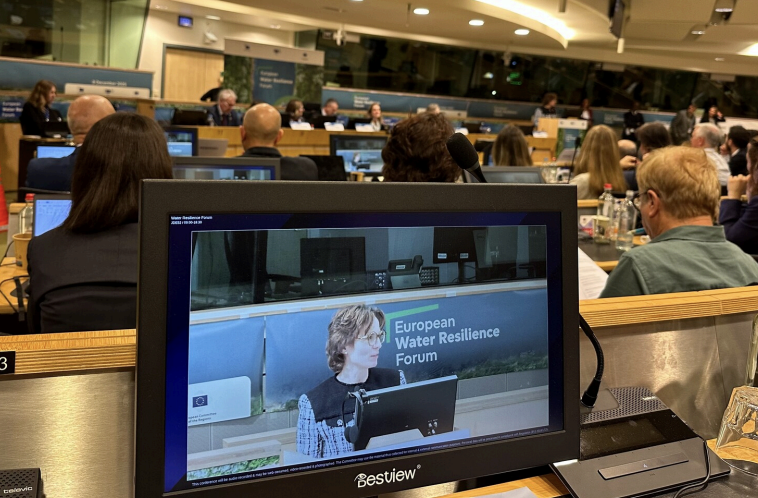
The launch of the first EU Water Resilience Forum on December 8 marked a milestone moment — not only for Europe but for all regions grappling with the escalating impacts of climate change. As EU Commissioner for Environment, Water Resilience and Competitive Circular Economy, Jessika Roswall highlighted in the opening session, Europe is facing a water reality defined by floods, droughts, declining reservoirs, and growing pollution pressures. These risks are no longer abstract: they are material, economic, social, and ecological.
What resonated strongly throughout the Forum is how closely this aligns with what we are observing in our work across Latin America and the Caribbean with United Nations Economic Commission for Latin America and the Caribbean (ECLAC): how we plan and finance water investments matters just as much as how much we invest. Buildingresilience requires system transformation — in governance, in financial architecture, and in the way we understand the functions water systems perform and the mechanisms we design to capture and monetise the value they create. This was also the central conclusion of our special session during the first Regional Water Week: Closing the Implementation and Financing Gap for Water Security in LAC.
Putting the Water Cycle at the Center of our investment planning systems
During the plenary, Henk Ovink (Global Commission on the Economics of Water) reminded us that the resilience challenge begins with the broken water cycle itself. Europe’s commitment to restoring that cycle —through sponge landscapes, source protection, and integrated basin management — is a powerful signal that resilience cannot be delivered through incremental fixes. It requires rebuilding natural infrastructure alongside engineered systems, and valuing water for the multiple services it provides: public health, ecosystem regeneration, economic competitiveness, and climate security.
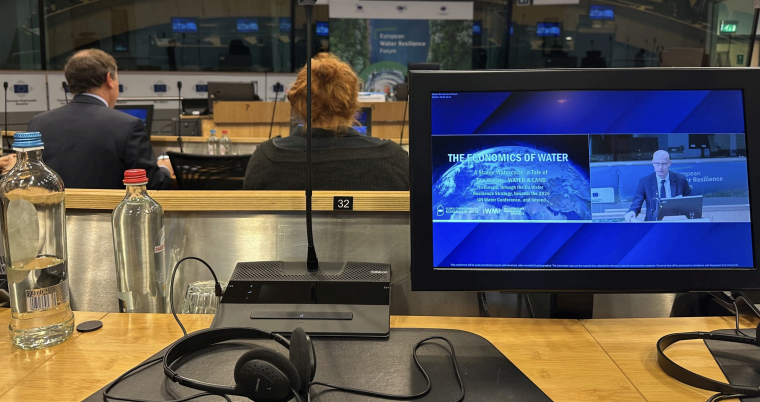
This systems framing is exactly what the Financing Framework for Water Security underscores: mapping the functions of water systems —and the specific water security investments associated with them — is essential for identifying viable revenue strategies, strengthening cost–benefit analysis, and ensuring fair risk allocation between public and private actors. A crucial first step is understanding the economic nature of the goods and services being delivered by both natural and builtinfrastructure: whether they are private, club, public, or common-pool goods. This classification shapes the options for fit-for-purpose governance arrangements and revenue models. For instance, public goods are typically financed through taxes or transfers and deliveredthrough public procurement mechanisms — ranging from traditional design–bid–build contracts to more complex public–private partnership structures.
Financing Water Resilience: Rethinking Roles and Redesigning the Plumbing
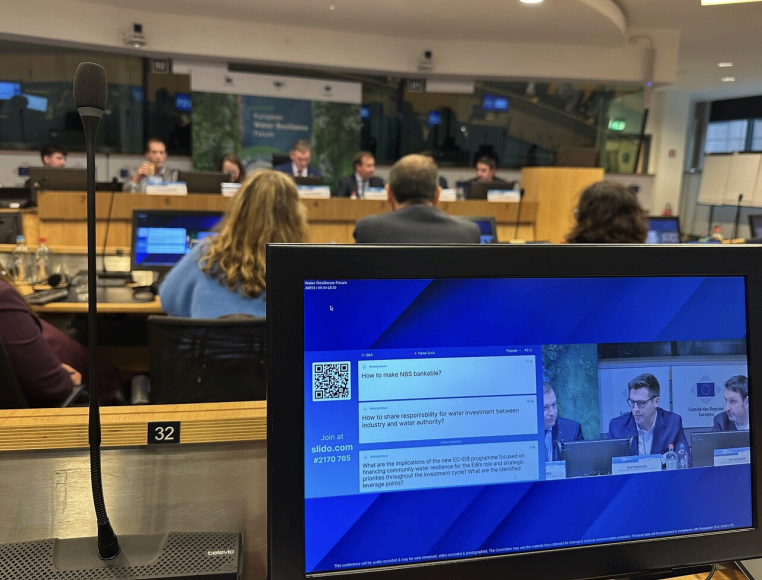
The session on Financing the Way to Water Resilience, expertly moderated by Magdalena Rzeczkowska (European Economic and Social Committee), brought these issues into sharp focus. Speakers such as Edouard Perard, PhD (European Investment Bank (EIB)), Ben Townsend (Google ), Tim Segboer (Nederlandse Waterschapsbank (NWB Bank)), and Job van Schelven (PureTerra Ventures) illustrated the breadth of actors who now shape the financial architecture of water resilience.
Several insights stood out:
- Major industry players are integrating water into capital investment decisions — including the siting of data centres and water–energy optimisation that can reduce energy use by up to 40%.
- European financial institutions are leveraging sustainability-linked bonds, where achieving water-related KPIs reduces borrowing costs, aligning incentives while strengthening governance.
- Venture capital voices emphasised the need to “fund the future, fund failure, and funnel funding,” recognising that innovation requires tolerance for risk — yet innovators still struggle to access available capital.
Overall, the two financing challenges highlighted align with what I have observed across regions regarding financing of water security and adaptation: funding not financing per se is where the main challenge exits, and then the money exists, but the plumbing — the mechanisms, intermediaries, and enabling environment to move it — still needs redesign to reach utilities, communities, SMEs, and watershed actors.
Industry, Regions, Rural Areas: Broadening the Lens
Sessions across the day reinforced the cross-sectoral nature of the resilience transition. From industry leaders in the parallel session discussing competitiveness and zero pollution, to regional representatives speaking on rural water use and irrigation’s share of Europe’s water footprint, the message was clear: resilience requires both territorial approaches and industrial transformation.
Rural areas must not be an afterthought. Agriculture as pointed out by Ramiro Angulo Sanchez from Junta de Andalucía remains a major water user worldwide, and while overall agricultural water use in the EU has declined, it is still the largest water-consuming sector, particularly in Southern Europe (Spain, Greece, Cyprus). In these regions, irrigation accounts for roughly a quarter to more than 40% of total freshwater abstraction, placing significant pressure on water resources. Strengthening the sector’s sources of funding — the “3Ts” identified by the OECD: tariffs, taxes, and transfers — together with robust water governance at the basin scale is essential to unlock the investments needed for long-term resilience.
Innovation, Skills, and Digital Transformation: Closing the Planning–Implementation Gap
Europe’s agenda goes beyond strategy — it aims to address the persistent bottleneck between planning and delivery. The Commissioner’s announcements highlight this clearly:
- Water Resilience Investment Accelerator
- Digitalisation Action Plan for the Water Sector
- European Water Academy
- Water Resilience Stakeholder Platform
During the session "Upskilling for Water Resilience: Inception for the European Water Academy," representatives from the Joint Research Centre, the World Water Academy, and leading associations presented the results of a survey conducted to inform its design. This survey, along with one conducted in the room, confirmed that skills in project preparation, PPP structuring, and business models are critical. This aligns closely with our work at ECLAC on strengthening capabilities for investment prioritisation and project preparation.
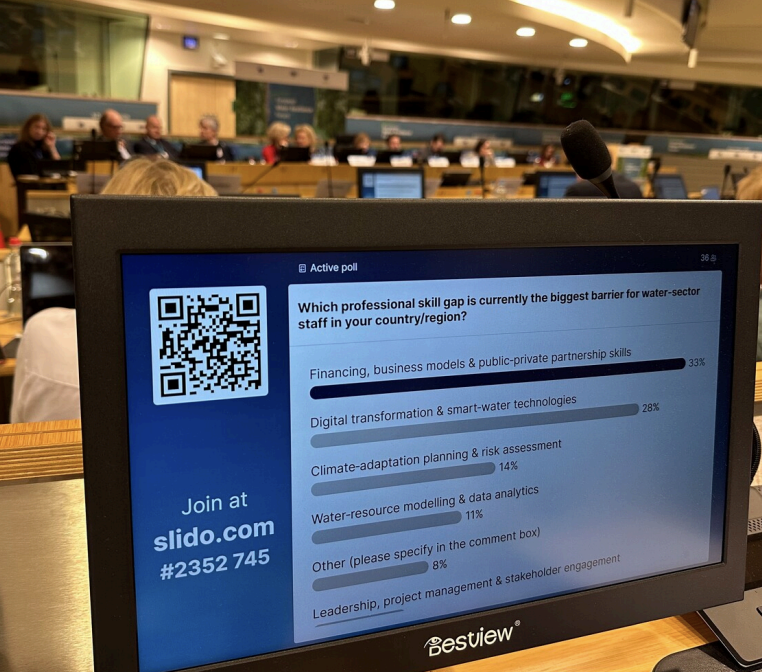
If we want to close the gap between plans and reality — a gap the President for the Committee of the Regions Kata Tüttő described as currently having “nothing to do with each other” — then human capital becomes the decisive factor.
Nature-Based Solutions: Borrowers, Promoters, and Bankability
An important conversation emerged around making NBS bankable, and I appreciated the clarity offered by Edouard Pérard and others in the forum: financing NBS is not fundamentally different from financing other public goods, and we should avoid framing them as competing with, or separate from, traditional infrastructure assets. What is essential, however, is the presence of clear borrowers and strong project promoters — and this is where the NBS community must step up.
A deep leverage point lies in strengthening the capacity of local and regional governments to develop a transformational pipeline of investments: beginning with a strategic vision of what a regenerative or nature-positive economy could look like within a specific watershed or landscape, and extending all the way to structuring a pipeline of bankable, investable projects that follow a mission-driven and programmatic approach to investment origination and monitoring. This is precisely the kind of impact we aim to support through the series of local-government bootcamps under NetworkNature EU — an effort we at ALTAMIRA Regenerative Finance are proud to lead.
The critical question ahead:
Who will lead watershed-level investments in protecting water sources — utilities, basin agencies, or new institutions?
Answering this will determine how quickly Europe can mobilise capital for source protection and ecosystem restoration.
Toward a Water-Smart and Regenerative Europe
The Commissioner closed with a compelling reminder: Europe cannot afford to waste a single drop and cannot afford the price of inaction. Yet with coherent planning, smart regulation, digital innovation, and aligned incentives, Europe can move decisively toward a water-smart, regenerative economy.
And with 20 pilot projects set to be financed through the Water Resilience Accelerator in 2026–2027, institutions like the EIB are poised to demonstrate what cross-sectoral, bankable resilience models look like in practice.
For those of us working globally on water security, Europe’s momentum offers a powerful signal:
Restoring the water cycle is not only possible — it is becoming irresistible.
Let ́s turn the tide together as the Global Commission on the Economics of Water calls on all of us to do.
Nature-Based Solutions for Disaster Resilience in the Built Environment
The challenge
A rising demand for space in delta areas in conjunction with environmental threats such as climate change, accelerated sea level rise and subsidence, require innovative and multi-functional approaches for water and disaster risk management of the built environment.
Water-related hazards as a subset of natural hazards account for 90% of all natural hazards, These include floods, mudslides, storms and the related ocean storm surge, heat waves, cold spells, droughts and waterborne diseases (UN Water). Disasters are often the result of a combination of hazards, some related to water and others of geological and biological origin. The frequency and intensity of water-related hazards expected to increase due to climate change. The Economics of Climate Change working group of the IPCC estimated annualized damages to GDP due to climate risk to rise by around 7% by 2030 (IPCC, 2014).
Climate change is also expected to magnify urban heat island effects and increase the frequency of floods for many cities. The impact of both phenomena will be likely exacerbated by the expansion of “hard” surfaces linked to urbanization processes (Field et al 2012; Gartland, 2011). Worldwide, hard surfaces cover as much of 67% of the land area of cities and “green” areas cover only 16% in some cities (Gartland, 2011).
There is increasing awareness that nature and natural processes engineered in a smart way could be the key to provide viable solutions to these societal challenges.
The idea
Nature Based Solutions (NBS) which integrate natural processes and ecosystem services in the design process of infrastructure are a cost-effective measure to improve the resilience of built environments. They achieve this by contributing to the climate risk management of infrastructures through both the building of protective infrastructure39 and the climate proofing of productive infrastructure.
NBS follow a design process that takes into account natural processes and ecosystem services, both used and optimized to fulfil multiple functions. As a result solutions are costeffective, environmentally sustainable (e.g. low energy use and material requirements) and often also require less periodic maintenance efforts and/or rehabilitation investments than traditional grey infrastructure. This is because ecosystems are able to adapt to changing circumstances and therefore make for a more robust design in the long term. In addition NBS contribute to the visual quality of landscapes and the natural capital of a region or country.
Examples of NBS are the creation or restoration of mangrove forests, shallow foreshores, sand dunes and reefs. These will not only reduce the wave load on coastal defence systems, but will also contribute to carbon fixation, and improve water quality. Moreover, several of these systems naturally adapt to sea level rise, as they have the capacity to trap sediment. Other examples include green roofs, permeable vegetated surfaces, urban forests and urban wetlands (Byrne & Yang, 2009; Douglas, 2011; Foster, Lowe & Winkelman, 2011). There are different ambition levels in design moving increasingly from man-made to a natural approach, and thus starting from an ecological optimization of land use, going through the design of artificial ecosystems and the creation optimal conditions for ecosystem development, and up to the reinforcement of existing ecosystems.
Their design process follows a multidisciplinary and multi-stakeholder approach. This systemic approach is required to deal with the technical challenge of integrating the dynamic behaviour of nature in the design of infrastructures with a very long useful life.
Although technological readiness (EARTO 2014) of NBS varies per solution, most of them are at level 6 of Technology Demonstration40, where prototype subsystems are being tested in relevant environments but due to the smaller scale applications one cannot yet say that the technology has been proven to work in its final form in an operational environment and perform to the specified functional requirements. In the pilots implemented while their hydrological and biophysical benefits have been well documented; the business case for their economic and financial performance versus grey solutions has received less attention until now.
The impact
Nature Based Solutions (NBS) are multi-functional and adaptive, which makes them a promising and robust long term solution. NBS seem a win-win strategy as they combine a risk buffer function by reducing future climate and water- related risks and the creation of a new form of capital: natural capital, which generates a flow of material benefits (ecosystem services)for a variety of actors and economic sectors (Matthews et al. 2015) . Due to their characteristics NBS contribute to climate adaptation as well as to climate mitigation.
As acknowledged by the European Union, NBS provide sustainable, cost-effective, multi-purpose and flexible alternatives for multiple objectives; between them biodiversity and ecosystems, natural resources management, sustainable urban development, climate change adaptation and mitigation and disaster risk reduction. Green infrastructure can help in regulating ambient temperatures, reducing storm-water runoff, reducing energy use, sequestering carbon and by creating affordable recreational opportunities to improve residents’ health and well-being. Working with nature, instead of against nature, can also accelerate the transition to a greener and competitive economy.
The following table (Deltares 2016) shows an overview the risk mitigating impacts of a specific NBS (mangrove forest restoration) on water quality and flooding; two key corporate and public sector risks.
The Nature-based engineering paradigm understood as the enriching of the traditional infrastructure planning process with green and hybrid solutions besides traditional grey infrastructure options can be seen as an opportunity for infrastructure and spatial planners. As stated by Matthews et al. (2015), the building with nature approach provides them with a framework to accommodate competing interests and combine environmental goals with dominant economic imperatives.
The barriers to innovation – and the solutions
Regardless of the many benefits of NBS for climate risk management and disaster resilience of infrastructures and built environments in general; their application and full scale implementation remains limited. Barriers during the different infrastructure phases – planning, design, project delivery and operation and maintenance – as well as important funding and financing constraints hinder their wider adoption. The most important barriers are discussed in this section.
Key internal barriers
NBS are perceived by the construction sector – public and private parties- as more risky than traditional and proven grey solutions and the sector is very risk averse.
Aiming at the prevention of casualties, societies have set very high standards and safety regulations for the “built environment” and construction sector procedures. In infrastructure projects the motto is to work only with proven technologies to limit construction risks to a minimum. The development of innovations has to happen in isolated and small scale pilots that minimize risk. Meanwhile the benefits of NBS are highly dependent on the scale at which they are implemented. Additionally the performance of NBS cannot yet be engineered with as much precision as grey solutions and due to the natural processes at hand their performance is expected to show a rather cyclical behaviour.
Definitional ambiguity and difficulties in conceptualizing green infrastructure and its advantages over grey:
The proponents of green infrastructure are often ecologists and biologists who approach these challenges from a different scientific paradigm. They therefore speak a different language to the key decision makers, who are often civil and financial engineers at the service of public authorities, contractors and financing institutions. While the former are convinced of the effectiveness of NBS in terms of their long term effect on flood and drought protection (mainly due to their adaptive capacity), given their research focus on the biophysical dimension of NBS in their pilots they may be failing to generated the right arguments and the quantitative evidence for key decision criteria. For example, they often leave less studied the socio-economic and political and institutional concerns surrounding NBS, such as life-cycle costs , total costs of ownership, and value for money offered by green and hybrid versus grey solutions. In their absence, key implementing actors can often then perceive elevated risks for NBS versus traditional grey infrastructure measures.
Key external barriers
Public-sector procedures and preferences: mono-sectorial infrastructure planning, public procurement and the focus of government on reducing transaction and agency costs.
In the planning phase the rational spatial planning approach assumes an objective, politically neutral and analytical process driven by the interests of asingle sector or public agency and confined to a defined time scale. This is an important barrier for the uptake of NBS given their multifunctional character that results in benefits spread over a variety of economic sectors at different geographical and time scales.
In a later phase, NBS face new barriers as they need to be procured following the same public procurement rules and contracting frameworks as regular infrastructure. A key challenge for NBS is posed by EU public procurement rules and international trends in national procurement strategies.
Shaping the Future of Construction: Insights to redesign the industry 69 These demand that unambiguous Key Performance Indicators and functional requirements are defined on which to base payments to private contractors implementing NBS, in accordance with a preference for performance based contracts. Additionally most EU governments have the aim to keep their size limited and opt for procurement strategies that require limited in-house personnel for their oversight.
Meanwhile, up until now NBS are often conceived and piloted along community driven governance arrangements that require a significant amount of coordination and oversight; either by the NGOs piloting them and/or by the governments in charge. There can also be uncertainty about who are or will be the NBS (private) “service providers” to take care of the whole green infrastructure life cycle and who will be held responsible for the solutions over a longer period of time. These mismatches hinder the uptake of NBS as part of the national infrastructure planning and procurement process.
This brings us to a crucial barrier for the full scale implementation and mainstreaming of NBS: no clear and/or significant pipeline of projects, and consequently not yet a well-established pool of service providers.
Besides the perceived elevated risks of NBS, a key barrier for the further uptake of NBS, whose main functions are associated with climate adaptation and disaster resilience, is the daunting financing gap faced by governments around the world. This brings us to our last barrier.
Financing gap: limited public funding for disaster resilience and climate adaptation and lack of bankable NBS projects to attract private financing. Adaptation costs for developing countries have been calculated by the World Bank (2010) to be between $70 and $100 billion from 2010 until 2050. The Global Canopy Foundation (2009) report a financing gap of $90 billion for mitigation and adaptation to climate change. And according to the World Bank (WB Easin 2012) approximately 85% of these funds must come from private finance. For these projects to be financed and implemented by the private sector, they must generate an attractive Internal Rate of Return.
Due to their intrinsic characteristics NBS conceived as disaster resilience and climate adaptation investments present unique risks because of their cash profiles (Altamirano et al. 2013). They encompass the challenges of regular climate adaptation projects: capital–intensive and unique, delayed and dispersed benefits, non-guaranteed and nonfinancial benefits, and limited autonomous earning power, accompanied with a high risk profile (Gleijm and Herdes, 2012). They then combine these challenges with those specific to green infrastructure projects (World Bank Easin 2012) such as elevated perceived risks, capital market- and information gaps due the “newness” of the technologies, and a risk-reward profile that makes these projects financially unattractive, in absolute or relative terms.
Solutions
To deal with the barriers mentioned above, Deltares, in close collaboration with the Dutch water sector, international research partners, multilaterals and conservation NGOs, has engaged in the following initiatives:
– Public-Private alliances, like the Dutch Water Sector alliance EcoShape, where top dredging companies, engineering consultants and research institutes work together to further develop and operationalize the concept of NBS and demonstrate its applicability and benefits in diverse contexts.
– By working together, trust is built and a common language established for the “eco-engineering” discipline.
– Extensive piloting and demonstration of NBS in the Netherlands and around the world, where the hydrological and biophysical benefits are quantified. Examples from the Netherlands are the national Room for the River programme and the Tidal Park in Rotterdam. International examples include the multifunctional coastal protection scheme for the East Coast Park area of Singapore, where sea grass beds and coral reefs play an important role and a large scale pilot of mangrove regeneration and permeable dams in Demak, Central Java in Indonesia.
– Development of design standards with key players such as USACE.
– Development of tools that allow for further operationalization of NBS design and create awareness about their potential. An example is the MI-SAFE tool developed in the FAST EU research consortium that allows evaluating worldwide the potential of natural foreshores to reduce flood risks by making use of remote sensing data, and which offers advanced services to public agencies and/or consultants to assist them in the design of hybrid flood risk mitigation strategies for coastal areas.
– Expert input to the Climate Bonds Initiative and the drafting of technical guidelines for NBS/green infrastructure water bonds.
Last but not least, we have developed a collaborative business modelling protocol where key actors for implementation and researchers engage in the development of a common language and a Return on Investment (ROI) model for NBS. Together they draft alternative project delivery and financing methods with the aim of structuring bankable ecosystem restoration projects. In order to speed up the uptake of NBS, a crucial step to be taken by NBS proponents is to align their research with the concrete information needs of the actors responsible and liable for the implementation of NBS. The creation of a common language between researchers and practitioners is a necessary first step. Our experiments with collaborative modelling techniques (Altamirano et al. 2013) have affirmed their potential to reduce the risk perception of implementing actors by increasing their understanding of NBS and consequently their sense of control over them.
The way forward
In summary, even though at policy and strategic levels the value of resilience and the role of nature are being acknowledged, implementation remains limited. The implementation challenge requires a different R&D approach than the one applied so far; one that is truly collaborative and places clearly the stakeholders in charge of the implementation of NBS and liable for the consequences hereof as the direct clients of the research process. Concrete pathways to go from isolated pilots up to full scale implementation in Natural Assurance Systems, and to ensure the financial and institutional sustainability of NBS in the long term, need to be drafted jointly with, and agreed upon by, key actors: public procurers, infrastructure financing agencies and project developers.
For NBS to become an equally valid option in the process of infrastructure planning and financing, they must pass the same tests and tick the same boxes as grey infrastructure projects in each phase of the infrastructure life-cycle: planning, design, build, operation and maintenance. These include, for example, design principles and building codes, or risk and quality management approaches for operation and maintenance. The construction sector and the infrastructure community are best positioned to lead this process.
Other important steps that need to be taken include:
Governments need to develop the instruments that allow them to “buy” or procure these solutions as easily and in the same standardized manner that they can purchase grey solutions. At the same time, they must also stimulate the creation of a private market of service providers through innovative procurement mechanisms available in the European Union, such as Pre-Commercial Procurement (PCP), Public Procurement of Innovation (PPI) and Innovation Partnerships.
The construction sector must start investing and expanding their eco-ngineering expertise in their role as experienced project developers. These actors are crucial to the process of structuring bankable NBS projects and making NBS suitable for performance based contracting.
In their roles as experienced risk managers and providers of capital, the financial sector and insurance sector are encouraged to show their commitment to a sustainable future by engaging with the research community, national governments and the construction sector in a joint search for innovative financing arrangements and insurance schemes; accompanied by necessary changes in national regulatory frameworks . These could encompass, for example, hybrid PPP (project finance) models combining availability payments with revenues from user fees and other alternative sources linked to the additional ecosystem services created by NBS. These innovations would need to account for the internalization and monetization of the many positive externalities of NBS, leading to the structuring of financially viable and bankable projects. A European H2020 project Initiative that exemplifies this collaboration and engage public authorities, insurance companies and researchers on the operationalization of the insurance value of ecosystems was recently launched under the title NAiAD: Nature Insurance value: Assessment and Demonstration (Mapama 2016).
Important systemic changes are also required to allow for a proper economic and financial valuation of the multifunctionality of NBS. These would reflect the change from predominantly mono sectorial infrastructure planning and financing to a nexus approach where the synergies and conflicts between the investments plans of different sectors are taken into account and valued, and where joint financing and procurement of multifunctional solutions are consequently stimulated and properly supported by renewed valuation methodologies.
– Altamirano, M. A., Van de Guchte, C. and Benitez Avila, CA (2013). Barriers for Implementation of Green Adaptation. Exploring the Opportunities of Private Financing. World Water Week 2013. Oral presentation for the workshop Cooperation for Sustainable Benefits and Financing of Water Programmes. Stockholm, Sweden
– IPCC, “Climate Change 2014: Impacts, Adaptation, and Vulnerability. Part A: Global and Sectoral Aspects. Contribution of Working Group II to the Fifth Assessment Report of the Intergovernmental Panel on Climate Change [Field, C.B., V.R. Barros, D.J. Dokken, K.J.,” Cambridge University Press, Cambridge, 2014.
– M., G. Heal, C. Dubeux, S. Hallegatte, L. Leclerc, A. Markandya, B.A. McCarl, R. Mechler, and J.E. Neumann, 2014: Economics of adaptation. In: Climate Change 2014: Impacts, Adaptation, and Vulnerability. Part A: Global and Sectoral Aspects. Contribution of Working Group II to the Fifth Assessment Report of the Intergovernmental Panel on Climate Change [Field, C.B., V.R. Barros, D.J. Dokken, K.J. Mach, M.D. Mastrandrea, T.E. Bilir, M. Chatterjee, K.L. Ebi, Y.O. Estrada, R.C. Genova, B. Girma, E.S. Kissel, A.N. Levy, S. MacCracken, P.R. Mastrandrea, and L.L.White (eds.)]. Cambridge University Press, Cambridge, United Kingdom and New York, NY, USA, pp. 945-977
– https://ec.europa.eu/research/environment/index.cfm?pg=nbs (European Union Website, Research and Innovation Directorate, Environment , accessed 5th December 2016).
– Hulsman, H., van der Meulen, M. and van Wesenbeeck, B.K. (2011). Green Adaptation. Making use of ecosystem services for infrastructure solutions in developing countries. Delft, Deltares.
– Field, C. B., Barros, V., Stocker, T. F., & Dahe, Q. (2012). Managing the risks of extreme events and disasters to advance climate change adaptation: Special report of the inter governmental panel on climate change. Cambridge University Press.
– Gartland, L. (2011). Heat Islands. London: Earthscan.
– Byrne, J., & Yang, J. (2009). Can urban greenspace combat climate change? Towards a subtropical cities research agenda. Australian Planner, 46, 36–43.
– Douglas, I. (2011). The role of green infrastructure in adapting cities to climate change. In I. Douglas, D. Goode, & M. Houck (Eds.), Handbook of urban ecology. Florence, KY: Routledge.
– Foster, J., Lowe, A., & Winkelman, S. (2011). The value of green infrastructure for urban climate adaptation. Washington, DC: Center for Clean Air Policy.
– Boccalon, A. and Altamirano, M.A.(2016) Evaluation of existing IWRM and green infrastructure technologies for integrated watershed management. Delft, Deltares
– Website of the Ministerio de Agricultura y Pesca, Alimentacion y Medio Ambiente. “La Confederación Hidrográfica del Duero lidera un proyecto europeo de innovación sobre economía verde y cambio climático”. 20/10/2016
http://www.mapama.gob. es/va/prensa/noticias/la-confederaci%C3%B3n-hidrogr%C3%A1fica-del-duerolidera-un-proyecto-europeo-de-innovaci%C3%B3n-sobre-econom%C3%ADaverde-y-cambio-clim%C3%A1tico/tcm35-435043-16
– Bayas, J. L., Marohn, C., & Cadisch, G. (2013). Tsunami in the Seychelles: Assessing mitigation mechanisms. Ocean & coastal management, 86, 42-52.
– Machado, W., Moscatelli, M., Rezende, L. G., & Lacerda, L. D. (2002). Mercury, zinc, and copper accumulation in mangrove sediments surrounding a large landfill in southeast Brazil. Environmental Pollution, 120(2), 455-461.
– Boonsong, K., Piyatiratitivorakul, S., & Patanaponpaiboon, P. (2003). Use of mangrove plantation as constructed wetland for municipal wastewater treatment. Water Sci Technol, 48(5), 257-66. – Ewel, K., TWILLEY, R. Ong, J. I. N. (1998). Different kinds of mangrove forests provide different goods and services. Global Ecology & Biogeography Letters, 7(1), 83-94.
– Alongi, D. M. (2008). Mangrove forests: resilience, protection from tsunamis, and responses to global climate change. Estuarine, Coastal and Shelf Science, 76(1), 1-13.
– Ecoshape website, accessed December 1st, 2016. https://www.ecoshape.org/en/projects/
– Natural Capital Coalition, accessed December 1st, 2016 http://naturalcapitalcoalition.org/
– EARTO 2014. The TRL Scale as a Research & Innovation Policy Tool, EARTO Recommendations 30 April 2014. http://www.earto.eu/fileadmin/content/03_Publications/The_TRL_Scale_as_a_R_I_Policy_Tool_-_EARTO_Recommendations_-_Final.pdf
– UN Water Website, accessed December 1st, 2016. Source: http://www.unwater.org/topics/water-related-hazards/en/
-Matthews, T., Lo, A. Y., & Byrne, J. A. (2015). Reconceptualizing green infrastructure for climate change adaptation: Barriers to adoption and drivers for uptake by spatial planners. Landscape and Urban Planning, 138, 155-163.